Simple wax layer application test
Simple NF paraffin layer application test
Most wax testing hours are spent trying to find the specific wax that is gliding fastest on race day. Application tests however are used to determine which TYPES of glide wax are fastest in specific snow conditions so teams can be more productive with their product testing time.
Application tests can focus on how the wax is applied and removed – iron, wool, fleece, cork, brush, etc. We’ve discussed some of these strategies in pervious videos on NTS. Simple application tests can also be used to determine what kind of wax layering is best for a specific condition.
Is liquid paraffin better than paraffin block? Is dark wax or graphite adding speed? Are topcoats necessary or are they slowing the skis down? These are all questions that I like to answer when thinking about non-fluoro application testing.
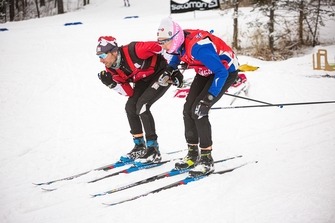
When I run this test, I will often prep the first 7 test skis shown below. Or just run pairs 1 and 2 first to get the result. Then return to the bench to prep the remaining 6 test skis.
IMPORTANT: Remember to use glide base cleaner and brush underneath all test layers. All hot waxes should be scraped and brushed the same way.
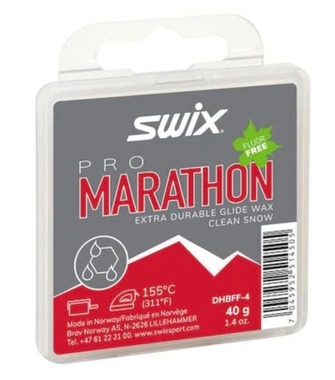
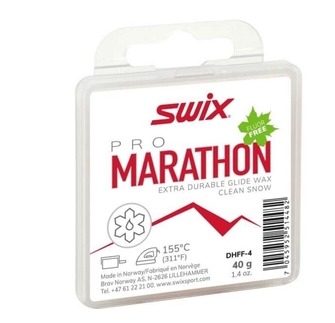
TEST SKI PAIRS:
1.) Marathon white
2.) Marathon black
3.) HS7
4.) Marathon (white or black) + HS7
5.) TSP7
6.) TSB7
7.) TS7 spray
8.) (winner from test 1) + TS7 spray
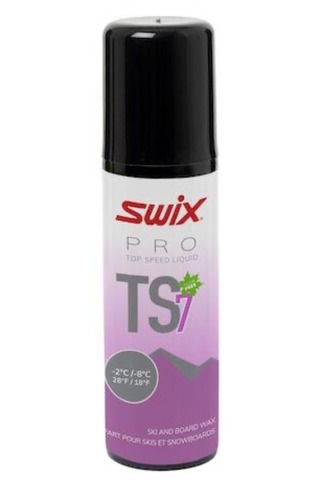
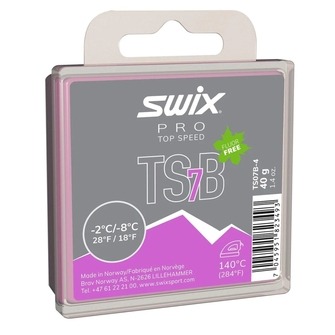
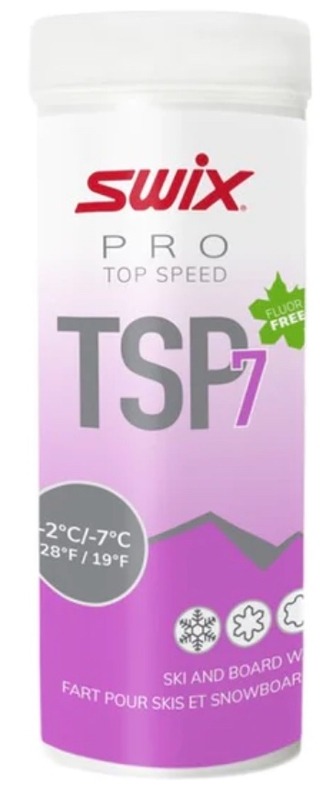
As you can see this test is split up into three parts.
Part one
Glide pairs 1 and 2 to determine whether a clean or a dark base wax is running well. Sometimes in dirty snow, transformed snow, or new falling snow a clean vs. dark wax will perform better.
Part two
Glide pairs 3 and 4 to determine if a base coat underneath a hot-wax paraffin increases speed.
Part three
Glide pairs 5 and 6, then glide pairs 7 and 8. Then perform a final glide to determine the winner of this 4 pair bracket. This test is telling us which type of topcoat is running the best, plus whether or not a base paraffin layer underneath a liquid increases speed. Sometimes it does, but sometimes just having a layer of base cleaner and spray is better.
Even from just completing these three tests we can learn a lot about the characteristics of the snow and how we can better prepare a wax test on race morning. The last step of this test would be to glide all the winners against each other to see how close the speed of the base wax is compared to the topcoats. As we know, in NF waxing sometimes base paraffins can perform just as well as topcoats.
The extra-credit step of this test would be to equally ski all the test skis approximately 5-10km and re-run the test to see how the layers withstand durability. (It helps to have a full wax team to do this)
What can we learn?
Part one of the test helps us see if clean or dark wax is better. Almost all wax brands these days have dark and clean wax. So, while this test was done only on Swix wax we could now zero in on dark OR clean waxes from other brands for a race day test and eliminate some guess work.
In part two, if pair 3 beats pair 4 we can conclude that base wax is not needed. If that’s the case even after the skis have been skied for several kelometers we know we can eliminate this step from our race day testing and just focus on topcoats.
In the topcoat bracket we can see whether paraffin topcoats or liquid topcoats are gliding better. If pair 7 beats pair 8 we know that a simple base cleaner plus liquid is running fastest. A high-school coaches dream if they have 30+ pairs of skis to wax:)
In my experience, we can use this information across brands. If the Swix TSP powder is better than the TS7 liquid, we can assume the same will be true for a wax of another brand such as Start, Rode, or Holmenkol and I would focus my testing time on powder paraffins vs. liquids for example.