
Why is strength important for skiers?
By Andy Newell
Skier strength training can look different depending on an athletes age, development, and strength building goals. A gym session can be designed to improve mobility and recovery to power and muscle gain and everything in between.
Transferring the strength we build in the gym to powerful efficient skiing on snow is our ultimate goal.  and can evolve as an athlete develops. Strength is a major indicator of performance in masters, U18, and youth ski racing. We see this play out all the time in youth skiing as athletes who exhibit a high level of strength in their technique can ski away from the competition on
At the highest level of skiing, we see less discrepancy in strength among competitors. When everyone is strong, and everyone can hold together decent technique, now aerobic capacity becomes a bigger indicator of race day performance. I think athletes and coaches sometimes underestimate how focused strength building can directly transfer into faster skiing.
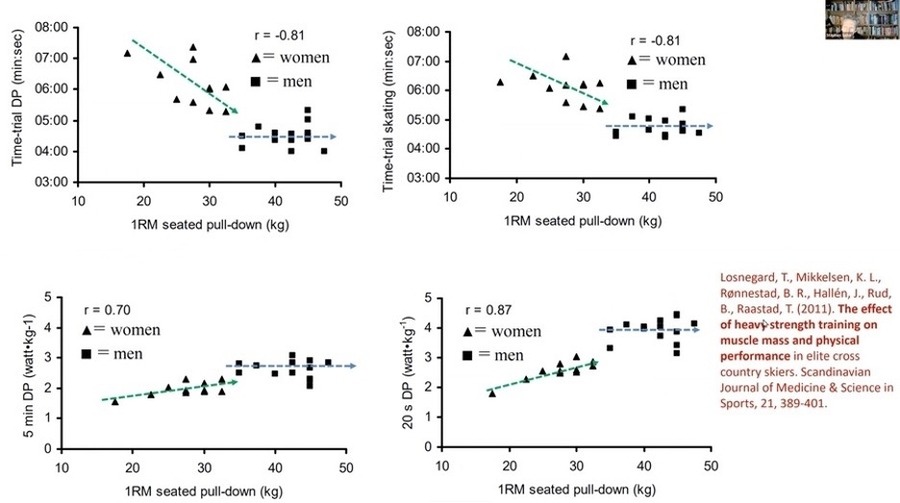
The image below shows data from a study of elite skiers who participated in a 12-week heavy lifting protocol. Strength gains were shown to increase performance in double poling tests of various duration., with women seeing an even greater increase in doble poling speed as strength increased.
Dr. Stephen Seiler does a great job explaining the data HERE:
Also: Here is a PDF of the full Losnegard study:
If a skier has substantial muscle mass is strength training still important?
Yes from an injury prevention and power development standpoint. . Even top level World Cup athletes who have adequate muscle mass can still make adaptations in their strength and improve how their strength is transferred to skis.
We know that core strength is crucial as skiers try to maintain efficient technique under fatigue.. Core stability and an athlete's ability to maintain a powerful body position on skies (even under fatigue) is key to racing fast. Furthermore, neuromuscular adaptations and better muscle recruitment can be improved through gym training.
THE OPPORTUNITY COST OF STRENGTH
Strength training is important, but we must recognize it can carry a high training cost. Strength building can cause a high level of stress and fatigue which can negatively affect our aerobic training if not balanced correctly. When elite level athletes are trying to achieve very high hours volume and intensity, eliminating some gym time can help athletes maintain good energy.
We see great strength improvements from developing athletes when strength training is periodized. During the spring and summer we try to build GENERAL strength and make small gains in muscle mass development. Then transfer to MAX strength in the mid-summer and as we begin to train more ski specific intensity in the fall we work on POWER and VELOCITY development in the gym.
Linear strength periodization uses
GENERAL - MAX - POWER - VELOCITY
Top tier athletes, who already have a high level of strength, might implement shorter bouts of max, power, and velocity training and spend less time working on pure 'general' muscle building.
The NTS plans implement various linear strength phases but also use weekly plyometric and power exercises in the gym and on skis to build power and velocity. This means the NTS strength plans are a linear and non-linear hybrid strength plan. If you have any questions about your personal strength training, please feel free to reach out directly.