CARBOHYDRATES – A SKI TRAINING MUST
By Andy Newell
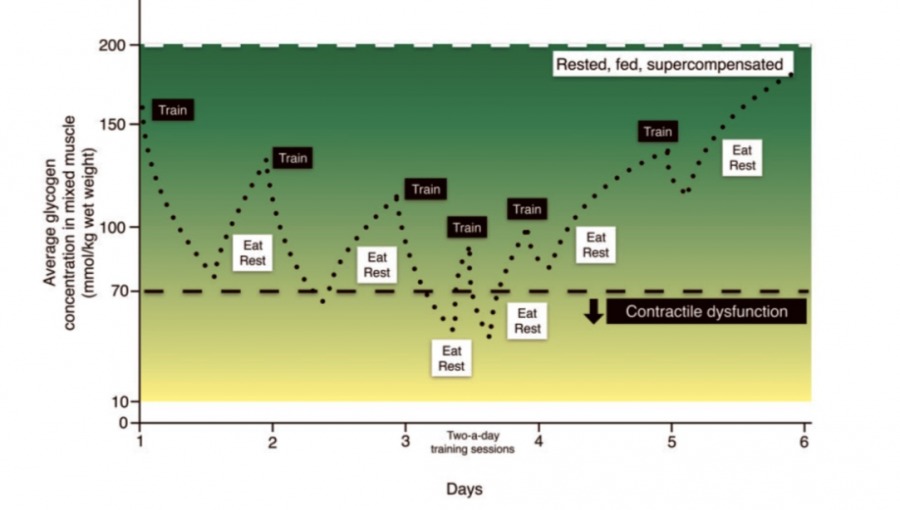
Fueling for training is always crucial but as we increase our intensity loads during the fall, we all need be extra vigilant about nutrition. When distance workouts, speeds, and weekly intervals are a part of your regular schedule there is one fuel source that becomes more important than all the rest, the infamous carbohydrate.
How did they become infamous anyway? In part because of new fad diets like the ketogenic diet that cut out carbohydrates entirely and supposedly teach your body to burn fat as its primary fuel source. The science behind burning ketones instead of glucose makes sense on paper but when put into practice it can be sketchy at best, even with someone with the activity level of a desk jockey let alone anyone who exercises regularly.
There have been instances where athletes claim to have benefitted from a low carb diet but any published data would indicate that these cases are rare and are coming not from the endurance sport world, but rather from the Ultra-endurance realm, consisting of races that are 15 hours or more in length. Even if you are a cross country skier training and racing in long distance races your longest Birkie or Vasaloppet fall well inside the window for prime carbohydrate burning efforts. Furthermore, your success in these races likely hinges on the fact that you fueled well with carbohydrates both before and during the race and have taught your body throughout your training to use carbohydrates as fuel on a daily basis.
The fact that all our bodies are adaptable enough that they can take both fat (ketones) or carbohydrates (glucose) and turn them into ATP (energy) is pretty amazing. At all times everyone has the ability to burn these two fuel sources, activate our muscles and lungs, and push ourselves during training and racing. But where carbohydrates stand above the rest is in how quickly they can be burned. Carbohydrate scan be broken down into ATP twice as fast as fat. In fact, that feeling of bonking that we have all experienced is your body running out of the ‘twice as fast’ carbohydrate and having to burn the ‘twice as slow’ fat as a fuel source. We can all switch over to burning fat, it’s just not as an effective fuel source for the intensity level demands of ski training or racing.
Through easy-distance training and over-distance training, endurance athletes can increase how efficiently they burn fuel by lowering their RER value (respiratory exchange ration). This is the ratio of fats vs. carbohydrates everyone burns while at very low intensity. A more realistic way of thinking about an RER value is picturing very efficient athletes as getting more out of their carbohydrate stores than the rest of us. The body will always prefer to burn carbohydrate over fat and everyone’s body, regardless of what they have fueled with, will try to exclusively burn carbohydrate as soon as intensity levels creep toward anaerobic. With deficient carbohydrates in the system every athlete’s performance will suffer at high intensity.
Now we can see why consuming and storing carbohydrates becomes even more important this time of year when regular training weeks might contain several high intensity sessions. US Ski Team head nutritionist, Allen Tran, recommends using the guidelines below during a high intensity training week (note that almost every training week for an xc skier will fall under intense training unless they are training less than one hour per day and taking several off days.)
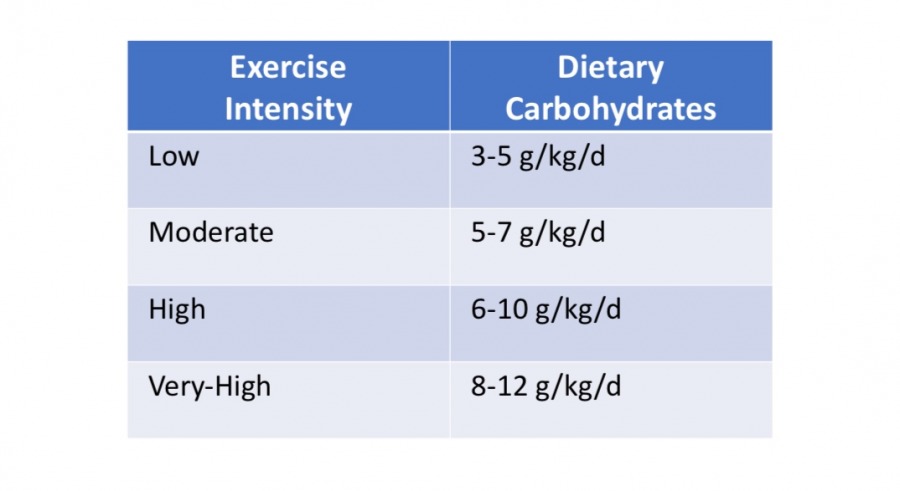
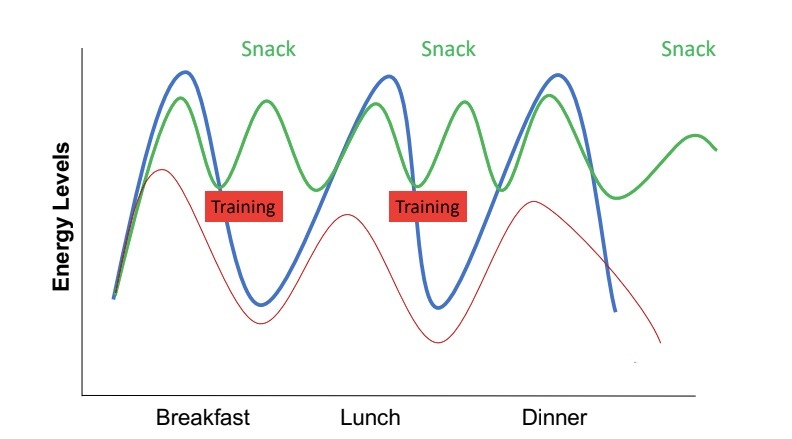
I personally like to think of carbohydrates as the ‘jet fuel’ for athletes. During easy training weeks with no intensity I don’t need to worry about them too much. However, when it comes to bigger training weeks with double sessions and multiple interval days, I need to think about fueling more regularly to keep up with the demand. This means getting away from the three meal per day routine and trying to feed more often during workouts and include high carbohydrate snacks throughout the day.
Using the guideline of 8-12 grams of carbohydrate per kg per day athletes can maintain higher energy levels AND have a better chance of getting in enough carbohydrates throughout the day with more consistent snacking. An Elite athlete of 150 lbs. during high intensity training and racing can can consume between 700 and 800g of carbohydrates per day.
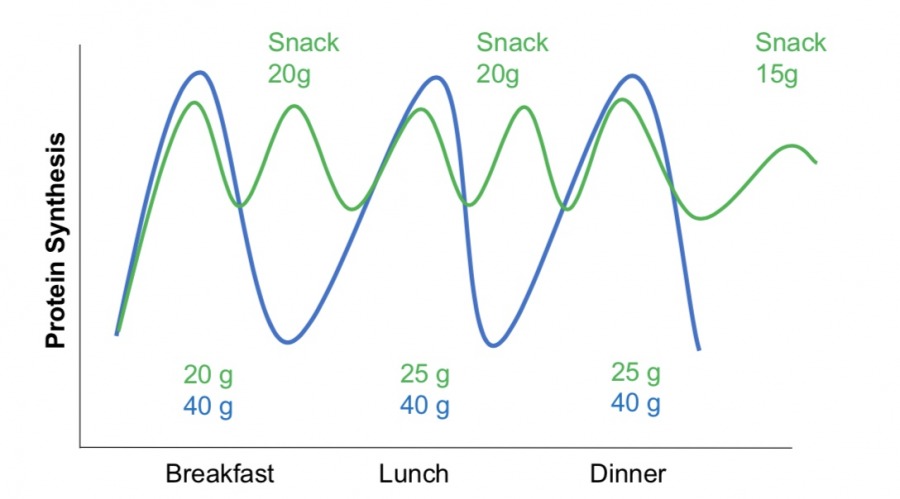
The same guidelines that help keep our body consistently fueled for workouts can also help our body recover more effectively. Incorporating smaller doses of protein, especially after workouts, can be better absorbed by the body and help provide constant repair for the muscles.
Going for the ‘tough guy’ approach and thinking that not fueling during a session might somehow train your body MORE has been proven ineffective time and time again. Without proper carbohydrate fueling, athletes can suppress their heart rates during interval days, decrease muscle function and muscle growth, and hinder performance during all types of sessions. This is why we like the saying ‘eat to train, don’t train to eat’. It means think about what the demands are of each day in advance and make sure to fuel before and during workouts, not just after. This will help keep performance high during the entire training week.