
What We Know About Skiing PHYSIOLOGY
By Sarah Willis PhD.
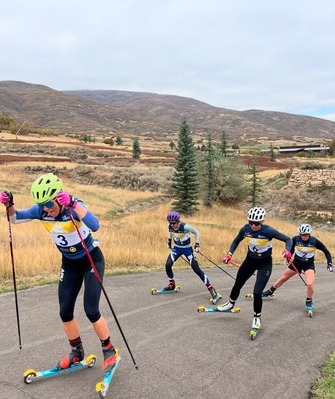 Though this is a wonderful adaptation, maintaining cardiac output requires a high VO2max, to be the “engine” for these large blood volumes. Further, high levels of hemoglobin are necessary to support the transport of oxygen in the blood and maintain blood volume. Vascular tone is also of great importance, as excessive vasodilation (relaxation of vessels) will reduce the perfusion pressure (ability to exchange O2 and CO2 following the pressure gradient for microcirculation). For example, when we ski with both arms and legs (i.e., whole body exercise), vasodilation must be restricted to a certain extent, as we need to maintain blood pressure to deliver adequate blood flow and oxygen to the working tissues. In fact, Secher et al. (1977) demonstrated that work of legs and arms together actually reduces blood flow to the legs for sustained effort. Then in 2004, Calbet et al. confirmed that when the vascular conductance of both legs and arms together exceeds the pumping capacity of the heart, the mean arterial pressure will decrease. In practicality, we need to produce high VO2 peak/VO2max ratios when working in sub-techniques using less muscle mass (i.e., double poling) compared to diagonal skiing (Holmberg, 2015).

What do we know about cross-country skiers (fittest athletes?)
What a fascinating question, right?! A unique thing personally is that as I get older, I realize that this sport has brought me an incredible base of fitness that I enjoy each day.
A review article was published by H.C. Holmberg in 2015 showcasing the physiology of the XC skier. This is us - skiers, so let’s dive briefly into this article and understand what kind of bodies we are building. Spoiler alert, we are efficient regulators!
It all comes down to how much oxygen we can transport (see previous article on this Oxygen Transport and Hemoglobin.) We breathe oxygen from our lungs, diffuse oxygen from the air into our blood stream, circulate this blood throughout our body in our vessels, exchange oxygen and carbon dioxide in the capillaries, then our tissue cells receive oxygen and use for energy metabolism. The more efficient this system is, the better our bodies can perform work. We have talked in previous articles about oxygen consumption (VO2, as a volume), this is a variable that tells us about the health and fitness of our cardiovascular system. We uptake/consume oxygen in our tissues relative to the oxygen availability in the air we breathe and oxygen delivery of our vasculature. Cardiac output (a.k.a., systemic blood flow) is an important parameter helping us understand both oxygen delivery and the utilization of oxygen by our many metabolic demands. For example, elite XC skiers have a cardiac output of around 40 L/min and a stroke volume greater than 200ml (measured back in 1968 by Ekblom and Hermansen). Cardiac output (CO) can be calculated as the following equation, CO = heart rate (HR) X stroke volume (SV). As athletes train more and more, maximal heart rate will remain unchanged or may be reduced slightly. Therefore, as HR is relatively stable, higher cardiac outputs in well-trained athletes are mainly due to increases in stroke volume. This is done through increased diameter and mass of the left ventricle of the heart, more rapid diastolic filling (during relaxation phase) developing greater end diastolic volumes (which in turn improve stroke volume), and enhanced vascular compliance (accepting greater blood volumes in the cardiovascular system) (Levine, 2008).
To expand on this, when working with smaller muscle mass sub-techniques, our body requires high perfusion pressure and proper vascular conductance. So, we demand a rapid delivery of oxygen to the active muscles in combination with impeccable oxygen extraction (ability to off-load oxygen to the tissue cells). In other words, our body works very hard to regulate blood pressure (ability to perfuse tissues with oxygen, kind of like soaking a shirt with water), especially when using small muscle mass. So, our blood pressure is higher when working with less muscle mass (higher during double poling than diagonal stride), for a relative intensity. We will talk in a future article about how our body regulates blood pressure. For reference, maximal perfusion of skeletal muscle is attained within about 30-45s after onset of exercise. Pretty cool if you ask me, now we know the potency of our shorter interval sets…hmm. Interestingly, XC skiers have wide conduit arteries in their upper arms, like those of kayakers (Lundgren et al., 2015). This explains why XC skiers can reach almost twice as high of perfusion in arms.
Some research I have led (Willis et al., 2019) also resulted in arms being more reactive to vascular changes than legs (this was with blood flow restriction during high intensity repeated sprint exercise). All of this to say, our arms (smaller muscle mass) respond differently to training stimulus than legs, usually arms respond more quickly as the stimulus is more robust. As we have seen above, our body also regulates blood flow differently to maintain blood pressure to achieve appropriate perfusion of oxygen into the tissues. We should therefore be training arms differently than legs, and focus on maximizing our efforts when whole body training (arms and legs, which is most often for us skiers). Fascinating stuff!
Remember with oxygen transport that we first have oxygen delivery to the region, then oxygen extraction into the tissues, then utilization by the mitochondria. Calbet et al. (2005) continued to show that arms and legs of elite XC skiers have exceptional oxygen extraction rates. These researchers indicated that legs extracted 93-95% of oxygen and arms 10-12%. They suggested that the differences between limbs were related to the altered distribution of blood flow between muscle groups, and the lower mean transit time and longer diffusion distance in arms.
The way our bodies extract oxygen is quite impressive. We extract oxygen from the capillaries by bringing it out of the capillaries and into the tissues following hydrostatic pressure following the pressure gradient and a process called diffusion. From there, tissues utilize oxygen for metabolism at the level of the mitochondria before following the osmotic pressure and bringing carbon dioxide and by-products back into the capillaries to circulate through our heart to the lungs for exhalation/etc.
However, the way that we regulate pressure to adapt to the demands of our body is even more extraordinary. Earlier in the article with the help of Calbet et al., and Holmberg, we said that we need high VO2 values to ‘keep up’ during exercise with small muscle mass and that our body regulates pressure to maintain adequate perfusion of oxygen. So, oxygen extraction is an important part of exercise with lower muscle mass (ex., double poling). When changing techniques to use smaller muscle mass (i.e., from diagonal stride to double poling), there is increased activation of arm muscles and pole force accompanied by a reduction in oxygen extraction. The reduction in oxygen extraction goes along with lowering of mean arterial pressure to distribute blood to the active muscles and extract/utilize as much of the oxygen as possible. In other words, our body has an autoregulation system to maintain blood pressure, so that we have enough oxygen available for the given task. If we are exercising at high intensity, and/or with smaller muscle mass, we are maximizing this regulation process and placing a training stimulus to improve this capacity (a.k.a., oxygen extraction ratio = oxygen utilization / oxygen delivery). We can really see from this research that improving our arms capacity in oxygen extraction is an area of great adaptation potential, even in elite XC skiers. So, get back out there and challenge your pressure regulation and extract more oxygen.
References
Calbet JA, Jensen-Urstad M, van HallG, Holmberg HC, Rosdahl H, SaltinB. (2004). Maximal muscular vascular conductances during whole body upright exercise in humans. J Physiol 558(Pt 1): 319–331.
Calbet JA, Holmberg HC, Rosdahl H, van Hall G, Jensen-Urstad M, SaltinB. (2005). Why do arms extract less oxygen than legs during exercise? Am JPhysiol Regul Integr Comp Physiol 289(5): R1448–R1458.
Ekblom B, Hermansen L. (1968). Cardiac output in athletes. J Appl Physiol 25(5): 619–625.
Holmberg, H.C. (2015). The elite cross-country skier provides unique insights into human exercise physiology. Scand J Med Sci Sports 25 (Suppl. 4): 100–109.
Levine BD. (2008). VO2max: what do we know, and what do we still need to know? J Physiol 586(1): 25–34.
Lundgren KM, Karlsen T, SandbakkØ, James PE, Tjønna AE. (2015). Sport specific physiological adaptations in highly endurance trained athletes. Med Sci Sports Exerc 47(10):2150–2157.
Secher NH, Clausen JP, Klausen K, Noer I, Trap-Jensen J. (1977). Central and regional circulatory effects of adding arm exercise to leg exercise. ActaPhysiol Scand 100(3): 288–297.
Willis, S.J., Borrani, F., Millet, G.P. (2019) Leg-vs arm-cycling repeated sprints with blood flow restriction and systemic hypoxia. European Journal of Applied Physiology 119:1819–1828.