
The Pellegrino Interval Session
By Andy Newell,
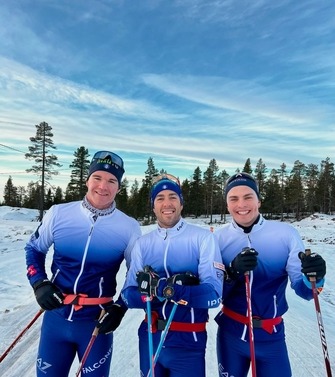
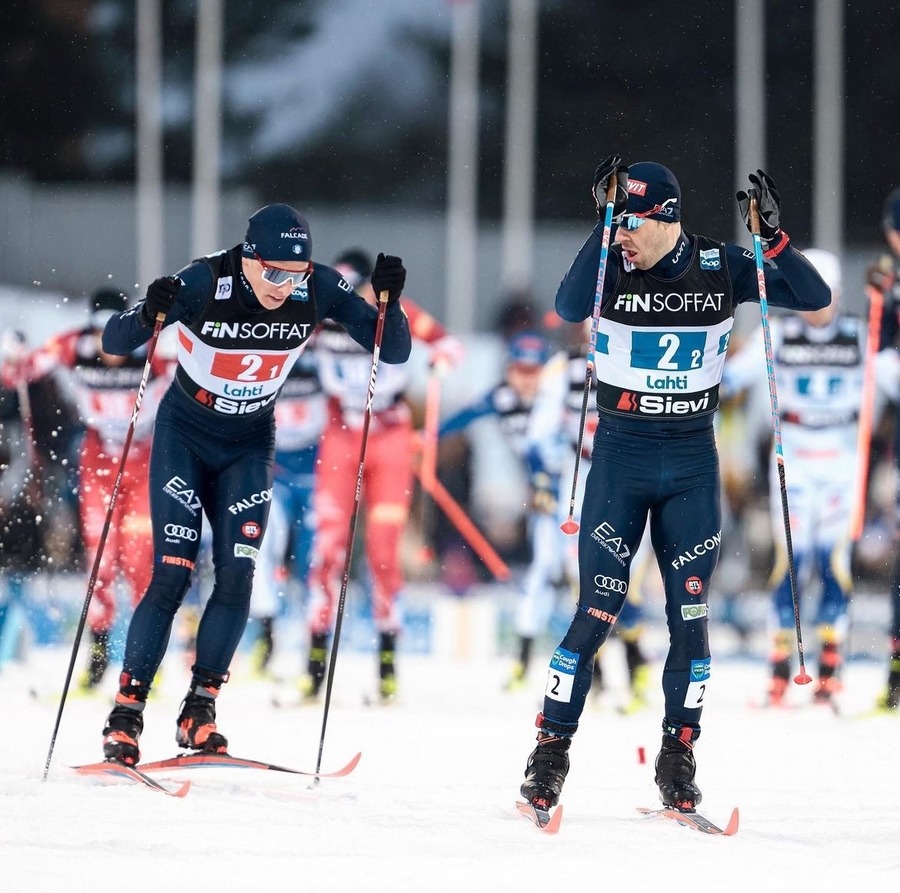
Italian World Cup skier Federico Pellegrino is someone we admire for his technique and longevity at the top of competitive skiing. At 34 years old Pellegrino began his career as a standout sprinter at a young age. Over the decades he has shown incredible talent and an ability to continually develop his speed and cardiovascular engine. Nowadays Pellegrino remains one of the best sprinters in the world (which is impressive at his age) and can often be found near the top of the results sheet in distance races as well.
Having trained with Pellegrino on several occasions during our careers I am impressed with the thoughtfulness he brings to his training approach. He is always thinking about what adaptations can be gained from specific training sessions. He knows what works for him and how to best develop fitness and speed for the World Cup season.
One workout that stands out in the Pellegrino playbook is a L3 sprint intensity combination session. These interval sessions combine controlled L3 intervals with higher paced 30-seocond efforts. On the surface this workout will elicit some obvious adaptations helpful for developing efficiency at speed and fatigue resistance. If we want to get better at moving fast on skis while staying relaxed we know that 30-seocond intervals are perfect for developing efficient power application and will improve lactic acid buffering. The simple change of pacing during this workout is productive practice for any skier in the early winter preparation phase or during the competition season. Adding faster intervals at the end of an L3 effort is productive for building muscular (technique) fatigue resistance which is perfect for marathon racers as well.
In addition to improving a skiers gear and pace changes this workout demands unique physiological adaptations that are needed to succeed in ski racing. We know aerobic capacity is important in elite level skiing, but AS important is a skiers ability to switch between aerobic (sub lactate threshold) and anaerobic (above lactate threshold) systems seamlessly. The varying terrain and power demands of ski racing make this a powerful tool in racing.
Below we outline the Pellegrino session, one I have done with him on snow and rollerskis on several occasions
Warm up:
30 minutes total
15-20 min easy L1 skiing
5-10 min L2
dynamic stretching and muscle activation
Interval set:
5-7 min controlled L3 directly into 4x 30-seconds on 30-seconds off L4
3 minutes easy skiing recovery
3 - sets
Pacing
Targeting a controlled L3 sub threshold pace is important during the 5-7 minute portion of these intervals. We want to teach the body to clear lactic acid at this pace. If the L3 portion is done too hard it will detract from this adaptation and compromise the quality of the 30-second bouts. The pace during the 30-second intervals should be fast L4 but with a hint of relaxation. We know this is the best way to develop and improve skiing economy at race pace. (if you feel like you cannot have a good turn of pace between the L3 and the 30-second intervals you are likely are doing the L3 intervals too fast. Target low L3 HR zones)
Terrain
We like to use gradual uphill rolling terrain for the L3 portion. During the 30-second bouts look for faster, flatter terrain so the L4 does not turn into lactate tolerance. At the end of the day the goal is not to punish yourself and flood the system, instead learn to ski fast and relaxed.