
SCAPULAR STABILITY
By Kurt Jepson
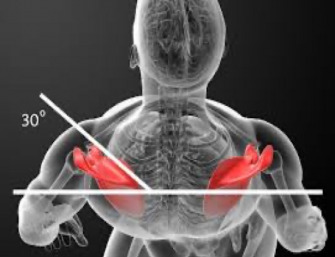
Below, Plane of the Scapula (POS).
Sports science literature is inundated with information which focuses on core and pelvic conditioning and the role it plays in athletic performance and injury prevention. Less time is spent discussing scapular kinematics and the vital role that structure plays in athletic movement and power transmission. Let`s look at the function of the Scapulothoracic Joint (STJ) and how we can maximize its` input to skiing fast.
ANATOMY:
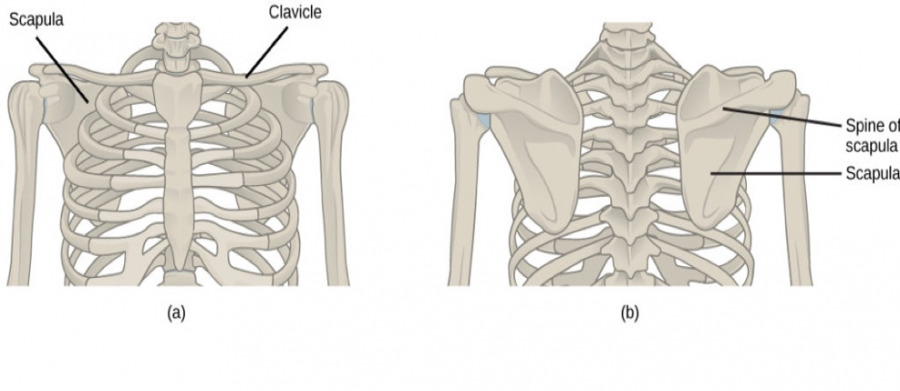
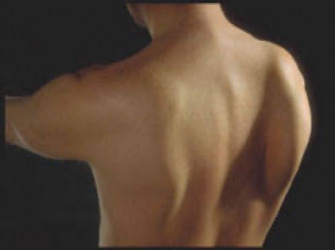
The Scapula or “shoulder blade” serves as a bony attachment for numerous muscles acting on the axial spine and upper extremity. It also serves as a protective barrier for the posterior thorax, ribs and upper lobes of the lungs. It is unique anatomically in that it has a very small bony communication to the axial skeleton via the Acromioclavicular Joint (ACJ) and Clavicle. Most agree that the STJ lacks characteristics allowing for classification as a true anatomic joint (ie the presence of articular cartilage and surrounding ligaments). As such it is often described as a Functional joint.
Most skeletal components in our body which provide a base for powerful muscle contractions have significant surface area contact to adjacent skeletal components via large joint structures. This in turn provides structural stability. The scapula must derive it`s substantial stability requirements solely from surrounding “periscapular” musculature.
ARTHROKINEMATICS:
The STJ provides a stable base for upper extremity force production as well as a link for continuation of distally produced power up the kinematic chain. An unstable STJ lends to dissipation of force and compromise of the resultant power output our shoulder and arms can produce for propulsion while skiing.
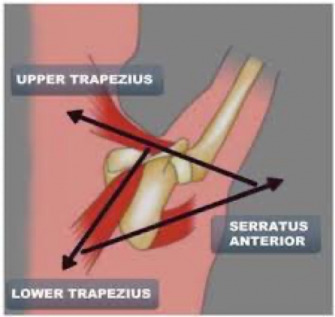
The circumferential array of musculature allows STJ movements to be controlled via a series of “force couples”. A force couple action produces a resultant vector of motion via two or more directionally opposed muscle contractions. The force couple easiest to visualize acting on the STJ is that of the Upper Trapezius and the Serratus Anterior. The Upper Trap elevates and medially rotates the superior scapula and the Serratus depresses and laterally rotates the inferior angle of the scapula. Contraction of the Lower Trapezius provides a center of rotation. The net movement of the STJ is a pivoting motion that allows the “ball” of the humerus to follow the “socket” of the scapula as the extremity elevates. This allows the Glenohumeral Joint to maintain “congruency” during range of motion. Congruency of a joint is vital to it`s stability, load bearing tolerance, and balanced muscle function which acts on that joint.
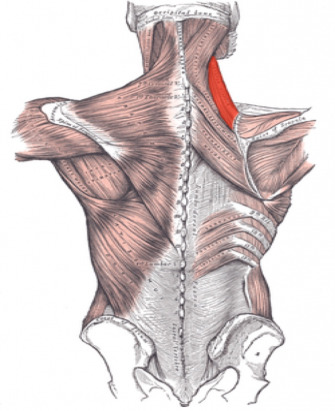
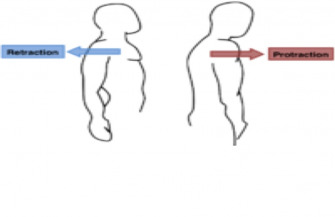
The Scapula moves about three axes as it glides along the contours of the rib cage. It elevates and depresses. It tilts anteriorly and posteriorly, and it moves laterally away from midline or medially toward midline. None of these actions occur in a single plane or in isolated fashion, but rather involve multiplanar translations. The AC joint plays a role in these movement patterns but for the most part, they are orchestrated by the periscapular musculature. The most commonly referred motions of the STJ are “Protraction” (migration to the front) and “Retraction” (migration to the rear). The retracted position is far more stable than is the protracted one. This is due to the associated force generation and surface area of the Trapezius and Rhomboid attachments along the medial border and spine of the scapula.
PATHOMECHANICS:
When the coordinated movements and/or dynamic stability of the STJ are compromised by; injury (ie fracture), nerve palsy, structural flaw, or weakness, the term “Scapular Dyskinesis” is applied. This term means an “altered state of movement or kinesis” and was coined by Lexington Kentucky`s WB Kibler MD, et al in a British Journal of Sports Medicine paper in 2010.
A “Protracted” scapula is most frequently associated with shoulder issues. Rotator cuff musculature has been reported to be as much as 25% weaker when working from a protracted position (Kibler et al 2006, Kebaetse et al 1999, Smith et al 2002). The Trapezius and Rhomboid muscles are also placed in a disadvantageous position when the scapula is anteriorly positioned.
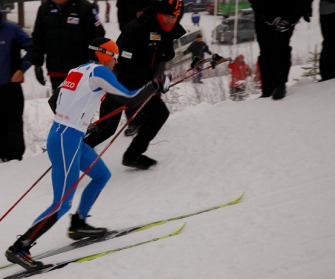
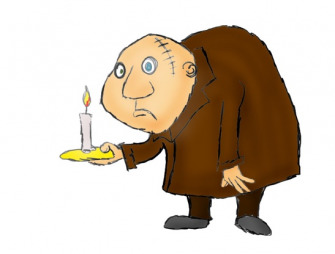
Dynamic stability, balance and congruency are vital to upper limb force production. Paradoxically for skiers, the upper extremity muscles used for propulsion, specifically the latissimus dorsi, serratus anterior and pec minor, are the very muscles which feed into a protracted scapular position if left unchecked. Excessive thoracic kyphosis further adds to this positional flaw and can be acquired by skiers, resultant of many years of training posture. Coaches encourage a relaxed upper torso posture and often use the phrase “ski like a caveman” which further enhances this deviation.
The result is an athlete more prone to rotator cuff impingement and tendinitis, mid spine and cervical strains, instability and even cartilage (labral) damage of the Glenohumeral joint (Burkhart SS, et al, Arthroscopy, 19, 2003). Secondary performance compromise goes without saying.
MANAGEMENT:
A muscular imbalance requires exercise. In the case of the STJ this especially holds true. Manual therapy alone is of little value (Camargo PR et al, JOSPT, 2015).
Presence of Scapular Dyskinesis can be readily assessed by a sports medicine clinician. A thorough history and neurologic exam are necessary to rule out non obvious pathology. Prior trauma may mandate radiographs to assess any architectural flaws resultant of fracture/malunion of the scapula, ribs or clavicle.
The resting scapular position, as well as movement analysis and functional strength complete the evaluation. Most eval tools focus on asymmetrys of strength and/or motion. The Scapular Slide Test and the Scapular Retraction Test are just a couple of many maneuvers a clinician may use to diagnose the issue.
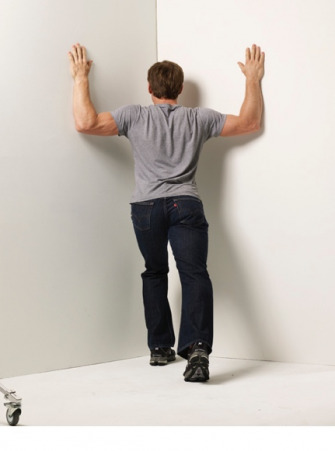
The presence of a “winging” scapula while pressing against a wall isometrically is a pathognomonic sign of periscapular muscle weakness and hence instability.
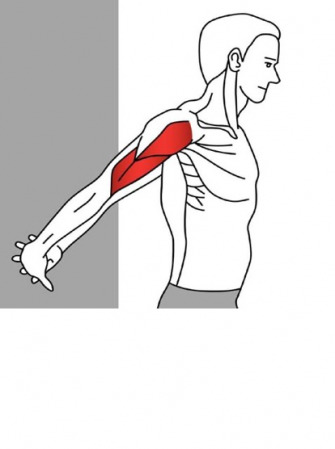
Stretching exercises (below) should be selected to address any anterior tightness of the pectoralis minor and short biceps head.
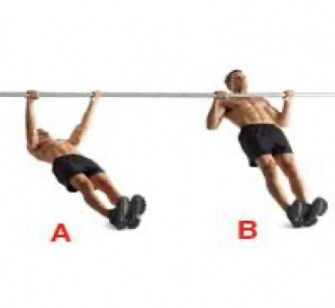
Strength work should follow a typical progression of isometric exercises (scap setting), moving to concentric /eccentric work, and lastly dynamic modes of contraction using body weight and medicine balls. Targeted groups include all three Trapezius muscles, the Rhomboids and the posterior rotator cuff. The Paraspinals/Erector Spinae are also part of the involved kinetic chain and require attention.
Functionally, in the Nordic skier, the scapular elevators and retractors listed above work primarily in isometric and concentric mode. Forces generated are sub maximal, but do require an endurance component to stabilize for extended periods of time. As such, multiple sets of 12-20 reps are appropriate in a traditional concentric emphasis fashion.
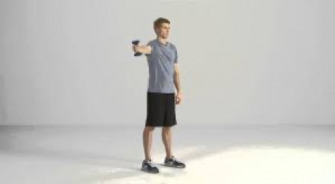
Recall the importance of force couple activity around the STJ. Exercises should maximize those coordinated actions via movement patterns in the “Plane of the Scapula (POS)”. The POS is the plane of upper extremity elevation 30 degrees anterior to the frontal plane of the torso. This plane maximizes congruency of the STJ and the GHJ (Glenohumeral Joint). It should be used for exercise when ever possible.
Below, Plane of the Scapula (POS).
Scaption in POS.
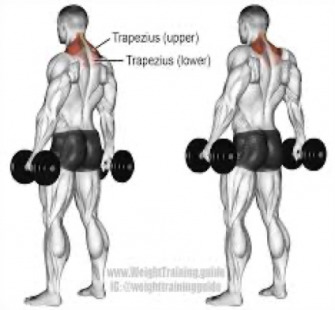
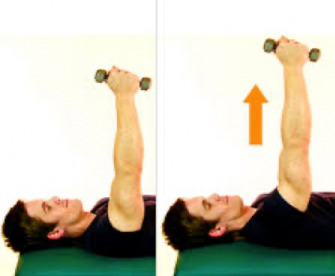
Isolated force couple exercises of Shrugs and Serratus punches below.
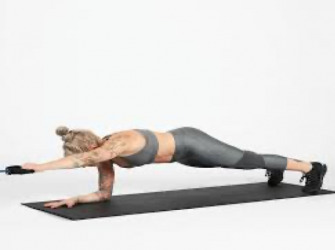
Serratus Plank Push Ups (body weight protraction/ retraction through fixed elbows).
Serratus Anterior, Biceps and Pectoralis strength exercises should focus on high loads and low repetitions. A “four rep max” load is recommended (4RM), with 4 reps x 4-6 sets per session after adequate warm up. These propulsion muscles get plenty of “endurance” work when we ski. What they need is high neuromuscular activation periodically throughout the season.
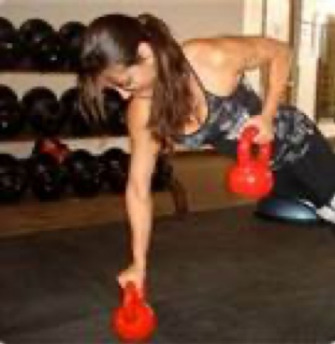
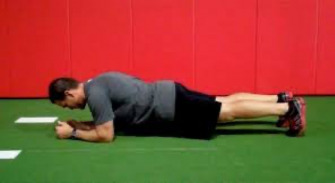
Plank variations should focus on protraction of the weight bearing limb.
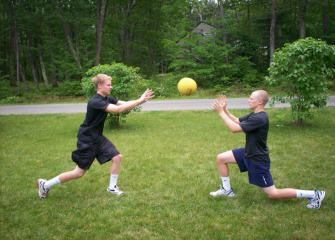
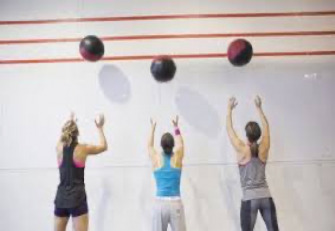
Medicine Ball dynamic recruitment.
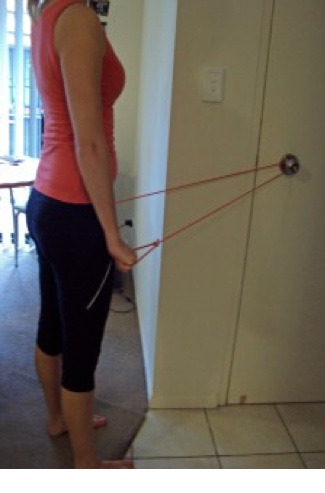
Skiers need to incorporate strength sessions into their weekly planning throughout the competitive season. One to 2 per week are beneficial. Body weight, tubing and one`s imagination can be used when traveling.
Core and hip exercise likely predominant most in season gym sessions for good reasons, but ignoring the importance of the STJ can compromise your power to the snow, or worse predispose injury.
With a large percentage of propulsive power originating from the upper extremities in modern skiing technique, we need to think of our STJ as the “core” of our arms. You put a lot into your skiing. Cover all your bases!