Ski TRaining and youR immune system
By Andy Newell
With the COVID-19 virus on everyone’s mind these days there has been a lot of discussion about how exercise affects your immune system. Will your ski training increase your chances of getting a virus? Help you stay healthy?
We are at the point now where a lot of the US and Europe have orders to ‘shelter in place’ which is inconvenient but in reality, cross country skiers should consider themselves pretty lucky. We only missed out on the very end of our race season and during a time when our government is telling us to stay put, we should be reducing our training load anyway.
With our April rest period approaching should we ‘ride the couch’ and settle in to three weeks of Netflix chillin and Cheetos? Not exactly. Finding a balance between rest, easy training, and light intensity will actually strengthen an athlete’s immune system and decrease their chances of contracting a virus. In this 2019 study The Compelling Link Between Physical Activity and the Body’s Defense System David Nieman compared different levels of exercise and how they affected the immune system of elite athletes.
In this study Nieman found that regular doses of ‘moderate’ exercise and intensity can boost an athlete’s defenses but if duration and intensity go beyond a certain point immune function is compromised.
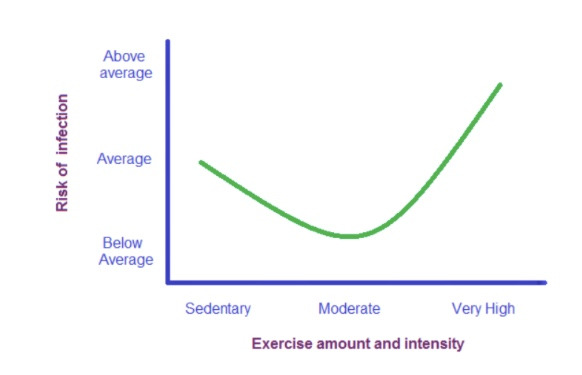
J curve graph *The Compelling Link Between Physical Activity and the Body’s Defense System David Nieman
Nieman believes for most people a rule of 60 can be applied. Exercising for more than 60 minutes at an intensity greater than 60% of your max can have a negative effect on your immune system.
To put this into xc skiing terms, I would still recommend getting out for some 1 hour to 1:30 distance sessions regularly but making sure to keep the pace close to L1. The occasional over-distance 3+ hour workout still has its place in April along with the occasional interval session but with the current COVID-19 pandemic we want to be even more vigilant about building in recovery before and after these harder sessions.
It’s no surprise that Nieman also found a strong correlation between how athletes fuel before, during, and after these harder sessions played a major role in how susceptible to sickness they became. We’ve mentioned this before here at NTS: Carbohydrates are essential in keeping skiers healthy. Immunity cells become noticeably dysfunctional in the absence of glycogen, meaning when a skier falls into a carb-deficient state (for example right after a long OD or interval session) they will be more susceptible to a virus for the next 24 – 48 hours. So make sure to snack well during and especially after any long or hard sessions this month.
Additional words of advice for athletes trying to avoid the COVID-19 virus.
- In addition to focusing on carbohydrate intake try to consume foods rich in polyphenols and flavonoids such a blue and red berries
- Continue to use social distancing especially in the 24 hour window following a harder session
- Keep to a schedule. This can be tough in April and especially when most of us are working from home. Even though our training load is low you can still make a regular routine of getting out the door at the same time each day
- Avoid alcohol. Even moderate drinking can bleach your system of essential minerals such as zinc which can still help reduce your risk of catching CODIV-19 when briefly exposed
- Monitor and be aware of your stress levels. Stress is still the number one immune system suppressant so recognize when life gets busy and stressful and replace a ski workout with a chill walk instead