Training the Finish Line Lunge
By Ned Dowling
The 2025 National Coaches Symposium hosted by US Ski and Snowboard, included a presentation from national team coach Kristen Bourne titled “National Project #2 - Win the Finish Stretch.” As the title implies, the talk centered around maximizing finishing speed including lane changes, free skate, and lunging for the line.
Unless you grew up a gymnast or doing splits at the Roller Rink, executing the finish line lunge without tearing a muscle or falling over before you get there can be a demanding task. This article seeks to offer some exercises to prepare the body and practice the boot throw in a low complexity setting.
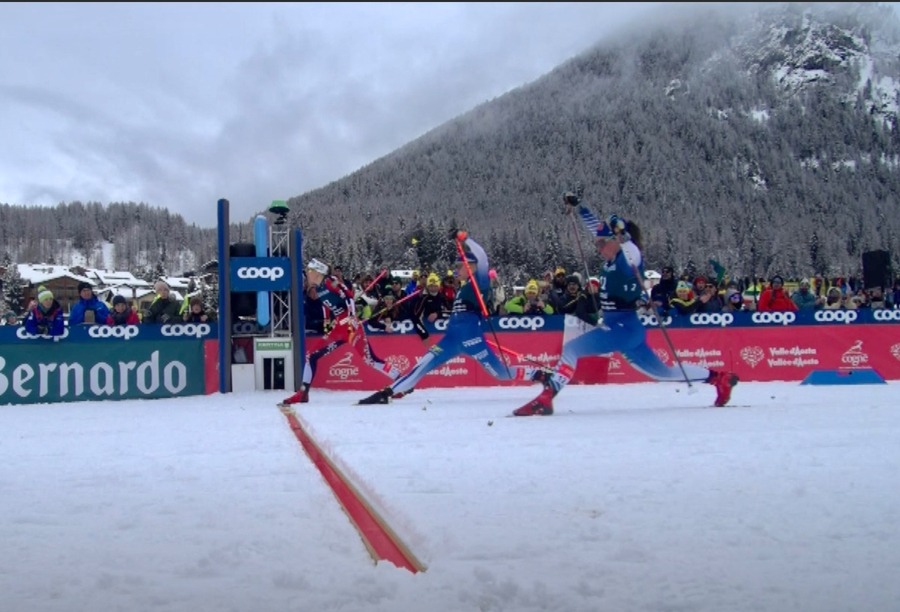
The finish line lunge requires hip extension of the trail leg and both hamstring flexibility and eccentric strength in the lead leg, all while maintaining balance on the skis. In more simple terms, the hip of the back leg needs to have enough mobility and flexibility to allow the body to move past it while lunging. Meanwhile, the front leg needs to get as far in front as possible. This will inherently be limited by hamstring flexibility. But the hamstrings also need to be strong while they lengthen as that leg gets pushed forward (eccentric is the term used for a muscle working through a lowering phase–think walking downhill or lowering a dumbbell from a bicep curl).
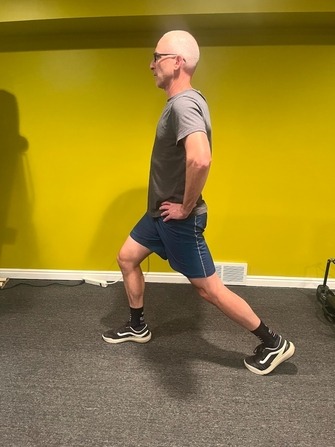
Hip Extension/Hip Flexor Stretch:
Stand with feet staggered and pointed straight ahead. Push your pelvis forward like someone is pulling you by your belt. Your front knee will bend a little as your weight shifts forward. It’s ok if the back heel comes off of the floor. Hold for 20 seconds. Repeat 2-3x on each side
Hamstring Doorway Stretch:
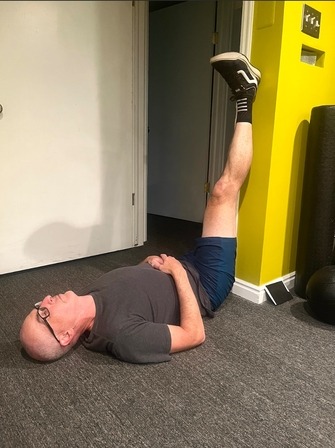
Lie on your back in a doorway with one leg on the ground and the other leg up the wall. Knees should be straight. The closer your butt is to the wall, the more intense the stretch. This position is a little awkward but allows for a low load, long duration stretch which tends to be the most effective for gaining flexibility. Hold for 3 minutes on each side.
Bridge With Slide Out:
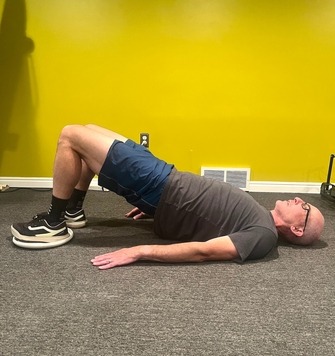
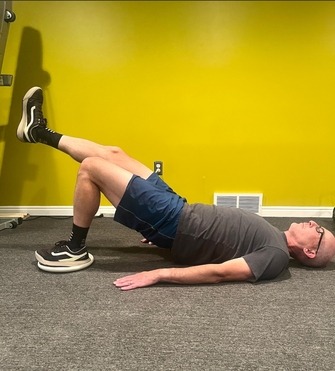
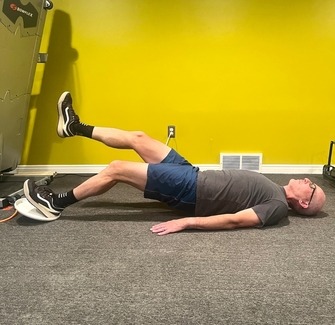
You’ll need to be able to slide a foot on the floor. You can accomplish this with a slider (specifically for exercise or a furniture mover from Home Depot), a frisbee, or a towel on hardwood or tile. Start on your back with knees bent and the slider/frisbee/towel under one foot. Do a bridge by lifting your butt up off the floor. Raise the non-slider/frisbee/towel foot off of the floor. Keeping your butt off the floor for as long as possible, slowly slide the other foot out. When you reach your max tolerance/ability, drop your butt down and reset the starting position. Look to do 3 sets of 3-5x initially and build to 10x. Keep in mind that eccentric exercises tend to create more Delayed Onset Muscle Soreness (DOMS) so don’t be surprised if it hits you 24-48 hours later.
Nordics:
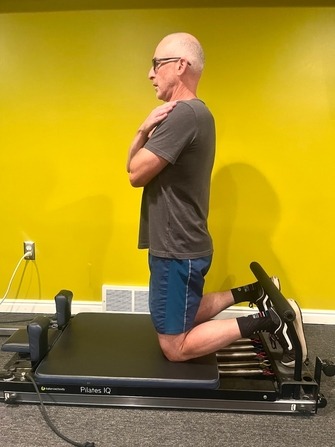
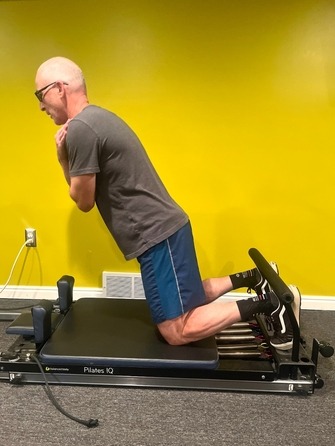
These are a very challenging way to work the hamstrings eccentrically. They are also very challenging to set up unless you have a partner to hold your feet. Start tall kneeling with your feet held down via a partner, furniture/object at the just-right height, or a Nordic machine in the gym. Begin falling forward from your knees. Hips shouldn’t move–maintain a straight line between knees, hips, and shoulders. The goal is to slow your descent for as long as possible before you have to catch yourself with your hands (or fall on your face). 3 sets of 5x is solid.
Dryland Lunge Practice:
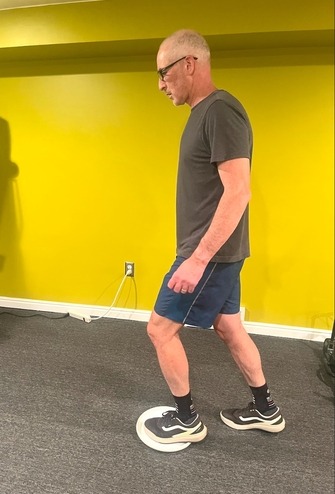
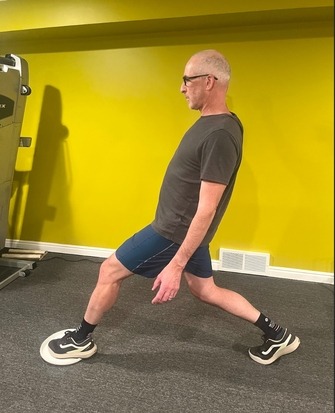
Using your slider/frisbee/towel, practice the boot throw. This could also be done with a rollerski on the front foot and the boot of the back leg on the ground. Learn the balance and the limits of your hamstrings and hip extension mobility before getting on skis. There’s bonus eccentric hamstring work if you try to stand back up from the lunge.