One Shot Drill - Biathlon
By Luke Brown
US Biathlon team / Crosscut
“The moment / You own it, you better never let it go / You only get one shot, do not miss your chance to blow / This opportunity comes once in a lifetime.”
While Eminem was no biathlete when he wrote these lyrics, and to my knowledge has not picked up the sport since, he obviously understands the importance of doing one shot drills. And not only that but in these words, he poignantly describes the truth that as a biathlete you may have thousands of shots in your career, and five shots every time you hit the mat, but each time your breath guides your sights back onto the black metal, in that moment, in that singular sphere of time, in the then and there, you indeed only have one shot.
I could undoubtedly dig deeper into how this rap star’s philosophy relates to and informs our sport and perhaps I will in another article, but for now my purpose is to discuss one shot drills, what they can do for you and your game, and how to get the most out of them.
What is a one shot?
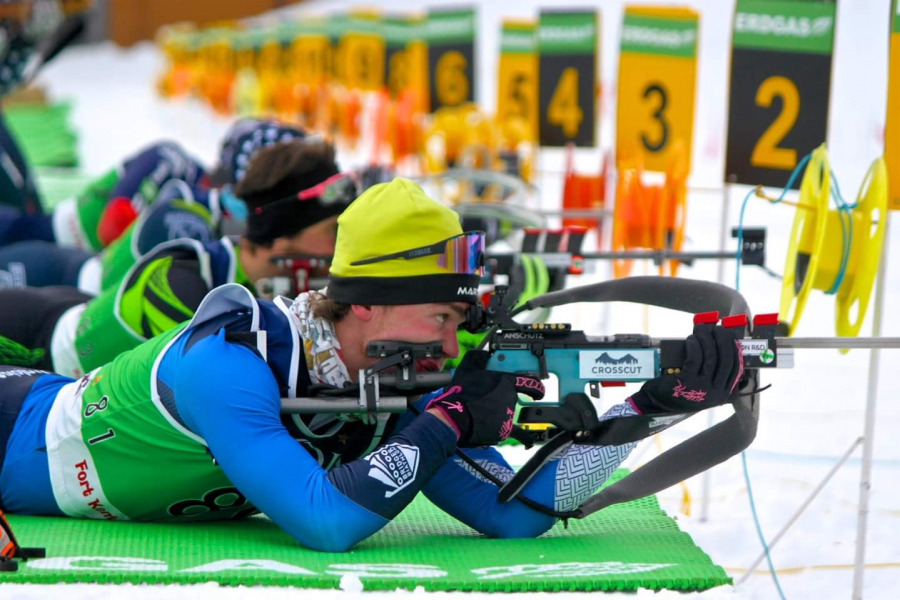
Executing a one shot drill merely entails getting into position on the mat, prone or standing, taking one shot, and getting off the mat. However simple the exterior of this exercise can be, how you mentally approach this drill can make for an extremely productive practice.
What are the benefits of one shots?
1) Position Awareness and Consistency
2) Range Efficiency
3) Shooting Proficiency
What are ways to perform one shots?
You can choose any one of these one shot drills to do during training or progress through all three in one slowfire shooting session. Oftentimes, one shots are a great way to dial in your range procedure and position before doing combos. Consider shooting only on paper at first to singularly focus on the process and not on the hits and misses. Transition to metal later in the practice or even later in the season.
- Individually with an Inward Focus (while all of these drills benefit shooting proficiency, this one uniquely works on position awareness and consistency). Shoot 10-20 one shots in both prone and standing at your own speed with a focus on your shooting position. For prone, think about where your knees hit the mat as you get down into position, where you place your hands on the mat and under the rifle, where your elbow lands and what the pressure is like from your shoulder onto the butt plate. Is there weight going down through your cheek rest? Notice your natural point of aim. As you take your shot, consider your trigger squeeze, follow through, and recoil. Think about which of these aspects most positively contribute to a solid position. What feels good? What feels questionable or shaky?
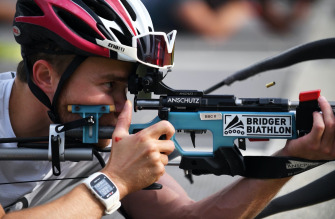
- Timed (primarily addresses range efficiency): Have a coach or friend start their watch as you hit the mat and read off times as you go through the entire one shot process. Focus on getting into position smoothly and efficiently, while continuing to focus on the cue that you devised before. Your breathing process and approach for each one shot (in this drill and the others) should be the same as for shooting the first shot of a five shot series; do not rush your breathing process just to get to the shot faster. After your follow through, close those sights, toss the rifle onto your back, and explode off the mat. Pay attention to the time that it takes you to get into position, shoot, and be off the mat. Focus mostly on decreasing the time before and after the shot - this should come primarily from procedure and position efficiency. You do not want to rush the shot itself. Remain smooth but begin to push the procedure and increase your awareness of how long the shooting process takes and where you can gain time.
- One-shot Competitions (works on range efficiency and shooting one shots under pressure): These mock one shot races can be person vs. person or done in a team relay format. See who can be the first to hit five one shots, or the first to five prone and standing one shot hits. Or make teams and do a relay. Remember that the focus should continue to remain inward even as you go head to head. Think about your previously established position cues and goals.
One shot drills are an undeniably important part of the process to becoming a good biathlete. Working on a consistent position and efficient range procedure will set you up to hit more shots. As you dial in your position and move toward timed one shots and one shot competitions, remember that at the end of the day, while speed is important, if you don’t hit your one shot, it doesn’t matter how fast it took to miss.
Do not miss your chance, each one shot comes only once in a lifetime.