
Drills for Shooting Position Stability
By Luke Brown
Approaching the mat for your final shooting stage, your muscles ache with the effort of the race,
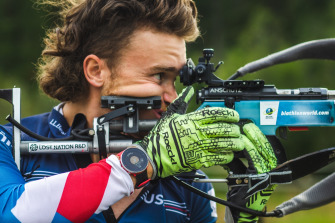
your chest heaves from the demands of the pace, and by golly, let’s say it’s windy just for the heck of it. Your goal: to find the most solid shooting position to execute and conquer. A novicebiathlete may feel like a reed blowing to and fro, a canoe about to capsize off the shores of Gitchi Gummi, a wavering willow in the wind, but you, oh practiced biathlete, you who have put in the hours of work, who have drilled the fundamentals of position into your brain and your body, you shall be a cedar of Lebanon, a stalwart of stability, a giant among the peoples.
In a biathlon race, as in the previous scenario, finding a rock solid shooting position is always a goal but often a challenge. The main factors that make it difficult to find stability are a high breathing rate and muscle fatigue (occasionally there’s also wind). Both of these contributors are internal - they come from within your body. You can practice shooting with these internal challenges by doing intervals with shooting. But you cannot do hard combo workouts everyday.
The following drills for position stability will introduce external ways in which to challenge your position’s stability. This will accomplish three things:
1) By creating external variables, you can challenge your stability more often than just when doing hard combos.
2) By removing certain elements of your position, you can force the remaining ones to really do their job.
3) By practicing drills that are even more difficult for your stability than what you face in a race, you will be better prepared to execute your shots under duress on the day it really matters.
The Drills
Standing:
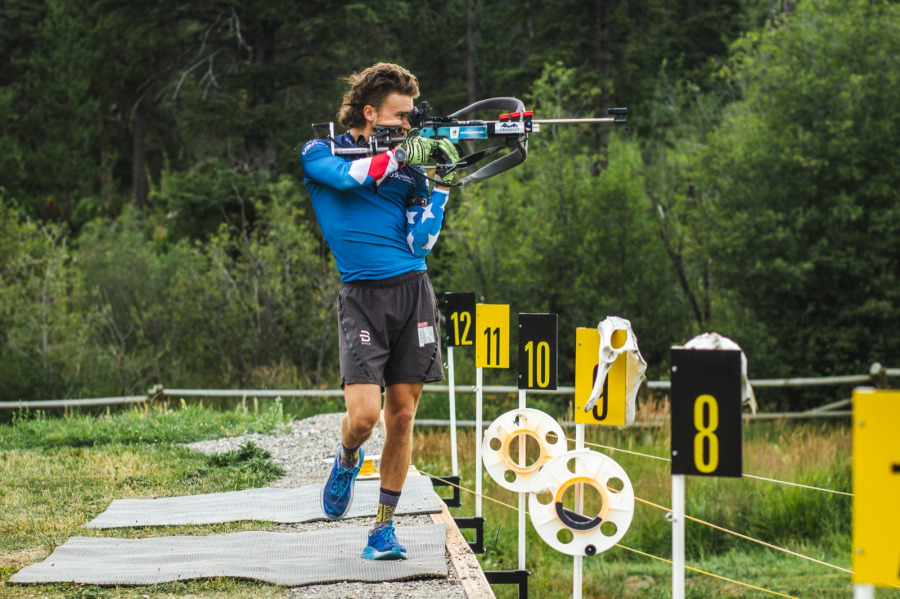
- Holds with no hand on the pistol grip: Get into position, find your natural point of aim, get ready to fire, but then take your trigger hand off of the rifle and hold it to the side. Usually, you would be pulling the rifle back into your shoulder with this hand. By taking away this element of stability, you are forced to make sure that your weight is going down through your cheek piece, into your standing block, through your wrist, elbow, hip, feet, and into the ground. You can pull back on the standing block to create more stability. You will especially have to find a good position for your elbow to sit on your hip bone. Try holding up to three minutes in this position.
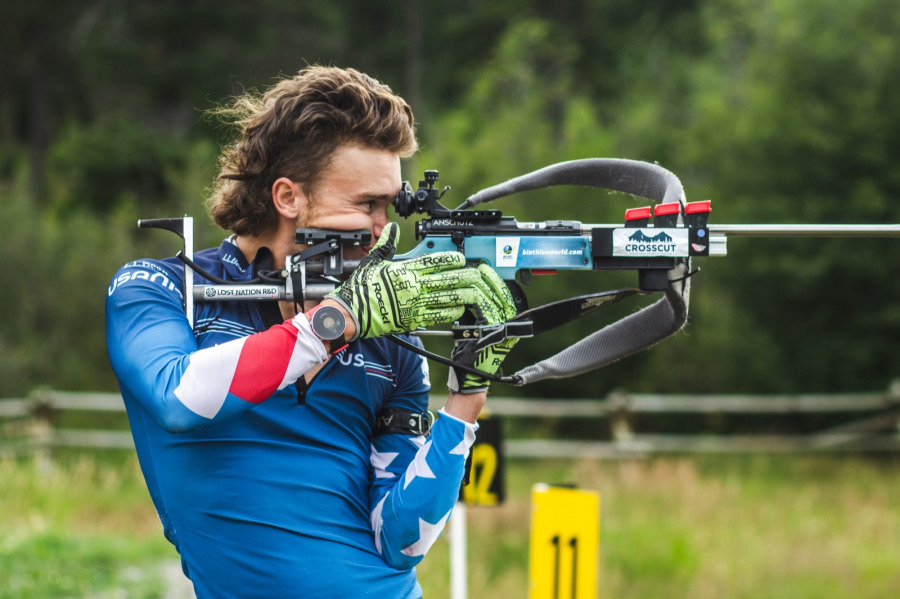
- Holds and shots with unstable footing: Try standing on two balance disks while holding on the target or even shooting a full magazine. If you do not have balance disks try rolling up your shooting mat and standing on that, or standing with your toes on it but your heels on the ground or vice versa. The goal here is to find stability while your legs are having to work for it! Just like in a race. You can get creative with this one!
- Holds and shots on one foot: Just like a flamingo. This is a challenge. While you wobble, focus on pulling the rifle back into your shoulder and toward your chest. Feel the weight through your cheek piece and down into your hip.
- Holds and dry-fire shots with resistance bands: Attach a resistance band around the barrel of your rifle. Attach the other end to a wall or have someone hold it to create resistance to the side. Alternatively, you can stand on the other end of the band to create resistance downward on the barrel - this will once again necessitate a really strong elbow-into-hip position.
- Eyes closed: For any one of these drills, try closing your eyes to make the balance more difficult! This will also let you focus on how your body feels and where the weight and tension is instead of just thinking about staying on the target.
Prone
- Holds and shots with no sling: When getting into position, do not attach the sling to your cuff. Otherwise, get into position normally. Focus on having solid weight through your hand stop and into the flat palm of your forward hand. Feel yourself pulling back with your other hand through the pistol grip.
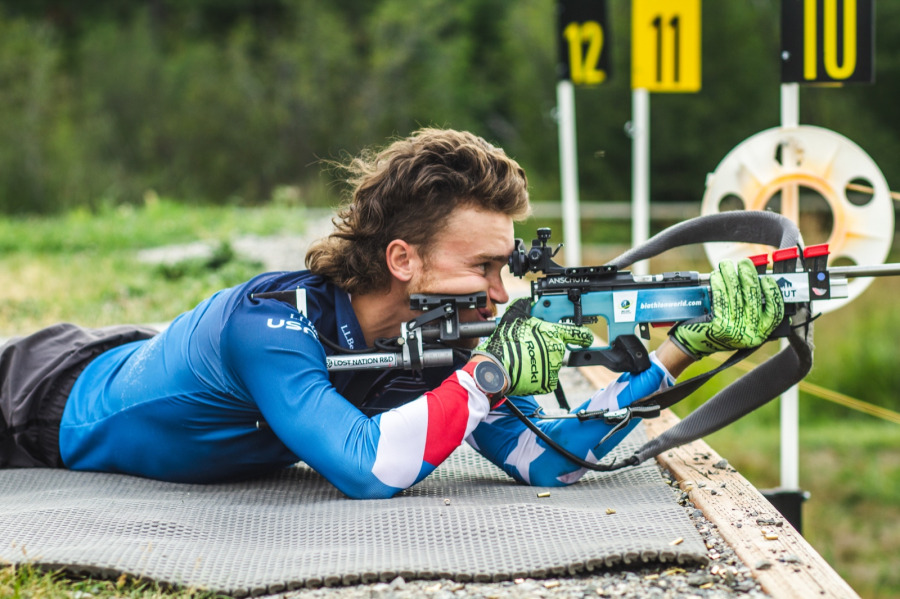
- Holds with no hand on the pistol grip: Similarly to standing, do holds without your hand pulling back on the hand stop. To do this most effectively, get into position normally, then take your hand away from the rifle and maintain the same position as you had with the hand (do not roll toward or away from your elbow). This will really let you feel the weight going from your cuff, through your sling, and into your forward hand. Also feel the weight going through your shoulder and into the butt plate. Do not be afraid to lean into it.
Get creative! Challenge yourself to come up with different ways to introduce elements of instability or remove factors of stability. For each drill, hone in on what part of your body or position is important to maintaining a calm, accurate, and stable sight picture.
While you should never find yourself needing to shoot without a sling or on one foot in a race, practicing these drills now will undoubtedly help you and your potentially weary legs come race time. Get after it!