
Cycling foR Skiers
By Ned Dowling
Cycling has long been excluded from Nordic ski training. Some coaches fault the time spent coasting downhill or lack of specificity. Others worry about the risk of trauma. These are reasonable concerns; however, the pros may outweigh the cons.
The main selling point of cycling is the ability to accumulate high volumes of low intensity training without significant musculoskeletal loading or stress. The training specificity may be lacking, but the aerobic engine and leg muscles are the same. Compared to running, your legs can tolerate a two or three hour ride with much less soreness and fatigue. This allows the easy sessions to remain legitimately easy leaving enough gas in the tank for the hard sessions. Be aware that there is typically more lag time between intensity and heart rate with cycling than with running or skiing. This means it’s not uncommon to push too hard on short climbs before you realize your heart rate, breathing rate, and ultimately intensity are more than intended. (A power meter is the ideal tool to gauge effort since the data is instantaneous.)
If you do want to include higher intensity work on the bike, the NTS interval workouts scheduled for rollerskiing, bounding, or running can be done on the bike with the same parameters. Route selection is certainly a factor as you don’t want to crest the hill or hit a stop light before your interval ends (or have to ride uphill during your rest). Terrain-ivals are a nice way to mix it up on the mountain bike trails–push hard on the climbs and recover on the descents.
In the heat of the summer, a road bike session will feel cooler than rollerskiing or especially running because you’re creating your own wind chill. Add some water on your head and the breeze plus evaporative cooling can make a big difference (except where it’s humid—then you’re just adding more water to your hot bath).
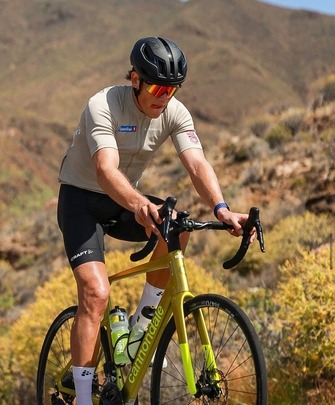
Autumn is also cyclocross season. Cyclocross and Nordic ski racing have a lot in common, starting with donning a lycra onesie and doing laps around a park. Races are similar in duration and intensity. The atmosphere is generally low key and friendly. And the suffering is 5-star. Again, the training programing needs to be intentional, but a ‘cross race can replace a high intensity interval session with a little more load and a lot more fun.
The Pain Cave vs The Pain: This is likely a familiar conversation for any endurance athlete, but we should all be reminded that there’s a difference between the suffering of high intensity workouts and the pain generated by an over-loaded muscle, tendon, or joint. Cycling is generally a “low impact” way to get aerobic exercise, but it’s not without the potential to cause injury (not to mention the trauma of crashing). If you’re feeling any niggles, aches, or pains, you should consider getting a professional bike fit. When we ride, we are at the mercy of what the bike asks our bodies to do, including the biomechanics of going around the pedal stroke or the demand of sitting on the saddle and reaching to the bars. An ill-fitting bike can push the limits of what the musculoskeletal system is willing to tolerate, especially when compounded by duration and repetition.
Sharing the road with 400 pound death machines can be a risky endeavour. Bright colors and lights are a must in the era of the always-distracted driver. A bit of patience goes a long way–even though cyclists have the same rights to the road as cars, many drivers don’t see it that way. In a battle of road rage, the vehicle will always win. Also, descending is an exhilarating reward for the effort of the climb, but think about toning it down and using the brakes a bit more. Ski season is right around the corner, and it’s hard to double pole with a broken collar bone (or worse).