
ThRee Reasons to statically stRetch your calf muscles
By Kurt Jepson
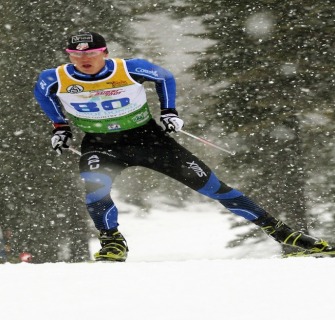
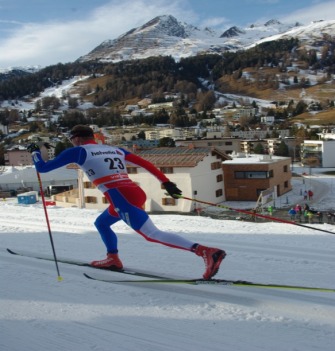 Any calf stretch will do. The key is duration and consistency. I would suggest 2-3, 90 second stretches at least 3 times per week, perhaps more in master`s athletes as our plastic deformation capabilities degrade as we age.
Some background
It`s been well established in the sports medicine and performance literature for years that static stretching of muscle groups has no effect on injury prevention as we were led to believe in “gym class”. A quick review of the literature via Cochrane Reviews and Wiley Library provides ample evidence of this. Dynamic functional warm-up routines have justifiably replaced static stretching exercises. At best static stretching may have some minor benefit regarding post exercise soreness and metabolite clearance.
It`s been well established in the sports medicine and performance literature for years that static stretching of muscle groups has no effect on injury prevention as we were led to believe in “gym class”. A quick review of the literature via Cochrane Reviews and Wiley Library provides ample evidence of this. Dynamic functional warm-up routines have justifiably replaced static stretching exercises. At best static stretching may have some minor benefit regarding post exercise soreness and metabolite clearance.
By the same token, static stretching (even in chronic doses) likely has no lasting downside to performance, and the inhibition of any immediate neuromuscular recruitment pathways is short lived. According to a 2016 study by Kummel J. , et al in the Scandinavian Journal of Medicine and Science in Sports noted that any immediate decline in post stretch power production of the posterior compartment was readily negated via simple hopping motions involving the calf muscles.
A 2001 study focused on running economy by Nelson AG, et al found no negative affects during a 70% peak VO2 treadmill test following a 10 week program of thigh and calf stretching. All participants retained their pre stretch performance abilities.
Static stretching techniques do indeed have an effect on our functional ROM (range of motion) by altering neural and mechanical characteristics. Guissard N. and Duchateau j. , Muscle and Nerve ,2003 showed a 30.8% increase in ankle dorsiflexion (foot movement toward the shin) following 30 daily sessions of calf stretching without affecting torque production of the same group. Although the passive stiffness of the calf took approximately a month to return to baseline at the conclusion of stretching, reflex/neural components returned to base values much earlier.
So potentially beneficial structural changes occur and can be retained (PNF contract relax techniques seem to have the most immediate influence regarding flexibility gain) but lasting neural muscular interference likely does not.
So as a Nordic skier why should we stretch our lower leg?
- SHIN ANGLE. Obtaining a parallel relationship between one`s torso and shin especially while climbing is not possible without deep ankleflexion (dorsiflexion). Twenty degrees minimum from neutral (ankle is 90 degrees to the shin) has been reported by many bio mechanists to allow efficient walking and running. Skiing requires much more than this to allow effective propulsion forces to the snow.
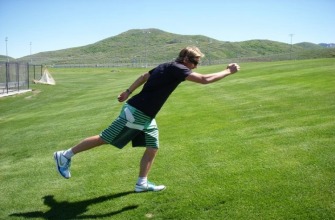
- SKI RECOVERY. Whether it be skate or classic technique the newly unweighted ski must be recovered under one`s center of mass to allow balance, glide and stability. The brief relaxation phase (milliseconds) of the calf and movement of the ankle into dorsiflexion allows for capillary blood exchange. The more flexible the calf is, the less passive resistance to dorsiflexion and the greater the net angle. Schwenzer NF, et al ( NMR in Biomedicine, 2009) identified a 20% improvement in anterior compartment fluid flow at just 10 degrees of dorsiflexion vs neutral or 40 degrees of plantarflexion posture (toe point, calf dominance). Fluid flow restriction of the anterior compartment has been implicated in the genesis of Exertional Compartment Syndrome (ECS).
- GLIDE. Aligned feet, shins, knees, and hips equals a fast gliding ski. Without adequate ankle dorsiflexion, particularly during the Classic stride, as the body passes over the ski during mid and late glide where required shin angle is at a maximum, the foot will aggressively pronate (collapse inward) if calf flexibility is deficient, thus driving the inside edge to the snow, decelerating the ski and it`s owner. Ground reaction forces and excessive pronation also cause an obligatory inward rotation of the knee and hip, destabilizing the lateral column and eventually the core.
The take away would seem to be that at least with static stretching of the calf muscles, we can lower our metabolic cost of movement, enhance our dynamic stability and employ better skiing technique. That should translate into speed and that`s really the end game.
Get it done!