
Block Training
By Andy Newell
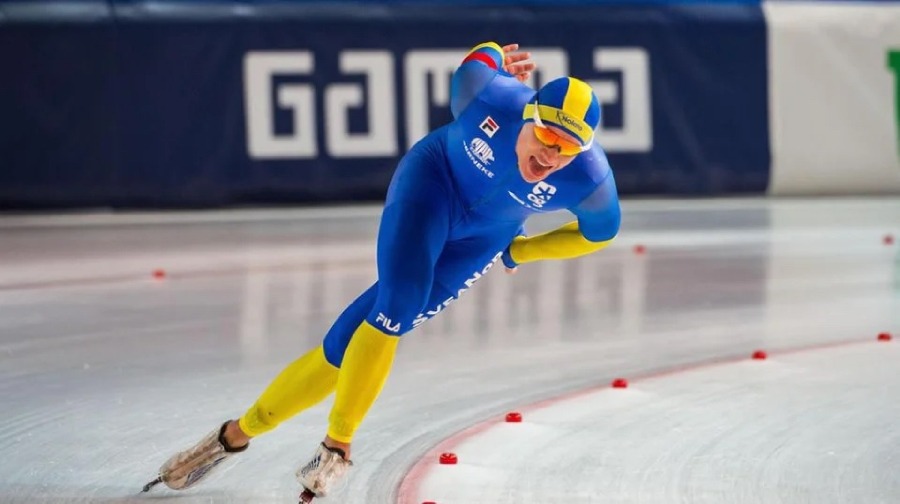
If you follow training theory you have probably heard of Nils Van Der Poel and his recent self-administered experiment in block training. Nils is a Swedish speed skater and current Olympic champion and Olympic record holder in the 5km and 10km.
What is block training?
All endurance athletes, whether they are speed skaters or xc skiers, periodize their training in a way that will first build aerobic efficiency through base training (L1 sessions) at the start of the training year. L3 and sub-threshold sessions are then integrated into the program to increase aerobic capacity and finally L4+ session are used to increase Vo2Max and race fitness as we get closer to the competition season.
Depending on the time of year we will have a greater focus on L1 or L3 or L4 but will also integrate all of these training methods within the same phase. Here at NTS we have used the analogy of going up a flight of stairs, meaning we are always implementing some kind of L1 base training but utilizing specific bouts of L3 and L4 training throughout the training year to increase total fitness.
Generally this means 85-90 percent of yearly training is done at low intensity and 15-10% of total training is interval training (L3 and L4). We tend to train the most L3 in mid to late summer, then add in more L4 in the fall and competition season.
Block training uses the same yearly/hourly breakdown in training zones (85-90% in L1, 15-10% in L3+) but does so by blocking them together in very specific training cycles with less mixing.
In his run-up to the 2022 Olympics Nils performed perhaps the most extreme version of block training by splitting his preparation into four different phases:
Phase 1 - aerobic season
Phase 2 - threshold season
Phase 3 - Specific season
Phase 4 - Aerobic season 2
Nils' training method caught a lot to attention because of how dramatic his block training program was. Within the first aerobic season (Phase 1) Nils spent 10 weeks exclusively training L1 and building incredible amounts of volume, logging weeks in the 25-33 hour range. To make his volume training even more extreme he would train on a 5 day training cycle with 2 rest days. Meaning he would train 5 days in a row averaging 5-7 hours of training, then take two rest days.
Example week during the Aerobic season
Mon 7h biking at 260W
Tue 6h biking 250W
Wed 2h x-country skiing + 4h biking at 250W Thu 7h biking at 265W
Fr 6h biking at 240W
Sat Resting
Sun Resting
Tue 6h biking 250W
Wed 2h x-country skiing + 4h biking at 250W Thu 7h biking at 265W
Fr 6h biking at 240W
Sat Resting
Sun Resting
During the threshold session Nils spent 10 weeks focused exclusively on L3 and sub-threshold training while also keeping the volume high. Most weeks he would log 5 back to back days with L3 training and continue with 2 rest days to absorb the training load.
Example week during the Threshold season
Mon 5h biking (5min 200W, 6min 260W, 4x30min 401W with 5min rest, 2,5h 220W)
Tue 5h biking (5min 200W, 6min 260W, 5x20min 405W with 4min rest, 3h 220W)
Wed 5h biking (5min 200W, 6min 260W, 6x15min 408W with 4min rest, 3h 220W)
Thu 5h biking (5min 200W, 6min 260W, 4x20min 405W with 4min rest, 3h 220W)
Fr 5h biking (5min 200W, 6min 260W, 9x10min 406W with 3min rest, 2,5h 220W)
Sat Resting
Sun Resting
During the Phase 3 specific season Nils focused exclusively on race pace sessions, performing skating sessions on ice that were designed to increase his race pace. He essentially abandoned zone training for pace training, trying to hit specific lap times on the ice over and over. Obviously this is tough for xc skiers since we do not have the ability to set pace specific workouts given our competition arena.
The warm-up:
5 min 200W
6 min 260W
3x30” 400W with 30” rest
6 min 260W
3x30” 400W with 30” rest
2 min 400W
→ rush to the ice (8 min until start of the first set)
The 10k session:
Bike warm-up
3x8 laps at 30,0” with 2 laps rest (1min 20 sec rest)
30 min rest (I usually got on the bike and did some easy stretching during this pause, but
3x8 laps at 30,0” with 2 laps rest (1min 20 sec rest)
30 min rest (I usually got on the bike and did some easy stretching during this pause, but
right before I left the bike for my next set on the ice I did 45 seconds of threshold so that I would be warm and ready for the coming set.)
3x8 laps at 30,0” with 2 laps rest (1min 20 sec rest)
The 5k session:
Bike warm-up
3x4 laps at 29,0” with 2 laps rest (1min 20 sec rest)
10 min rest
3x4 laps at 29,0” with 2 laps rest (1min 20 sec rest)
30 min rest (I usually got on the bike and did some easy stretching during this pause, but
3x4 laps at 29,0” with 2 laps rest (1min 20 sec rest)
10 min rest
3x4 laps at 29,0” with 2 laps rest (1min 20 sec rest)
30 min rest (I usually got on the bike and did some easy stretching during this pause, but
right before I left the bike for my next set on the ice I did 45 seconds of threshold so that I would be warm and ready for the coming set.)
3x4 laps at 29,0” with 2 laps rest (1min 20 sec rest)
Finally phase 4, the aerobic session 2, was implemented to help Nils peak for his championship competitions. He executed a fairly traditional overreach and taper. Here at NTS we often refer to the overreach as a 'training block and taper (see Peaking 101). For this phase Nils increase volume again before increasing intensity tapering off.
Example of an overreach and taper
Fri Rest
Sat Rest
Sun Rest
Mon 10k session + 2,5h biking at 210W
Sat Rest
Sun Rest
Mon 10k session + 2,5h biking at 210W
Tue 10k session + 2,5h biking at 210W
Wed 10k session + 2,5h biking at 210W
Thu 10k session + 2,5h biking at 210W
Fr 5k session + 2h biking at 210W
Sat 5k session + 2h biking at 210W Sun Rest Mon 10k session + 1,5h biking at 210W Tue 5k session + 1,5h biking at 210W Wed 5k session + 1,5h biking at 210W Thu 5k session + 1h biking at 210W Fr 5k session + 1h biking at 210W Sat Rest Sun Rest Mon Biking 200W 0,5h Tue 3 laps of 30”, 8 min rest, 1000m of 5 000m speed |
Wed Rest Thu 3 laps of 30”, 8 min rest, 1000m of 5 000m speed Fr Race 5 000m |
Is the success of Nils' block training relevant for xc skier?
This is always the million dollar question. Block training in skiing is nothing new, in fact it became very popular in the mid 2000s because of Norwegian skier Marit Bjorgen.
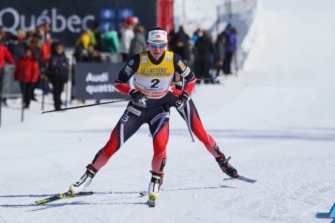
These training blocks were preceded and followed by easy L1 training weeks. Marit's yearly totals remained on par with typical endurance training, still logging 88 percent of her total training in L1, the rest however was L4.
Here is a link to an overview of Marit's training from parter.science.no
It's important to note that Marit utilized this block training model during 2005,2006 with great results. She also had amazing results and personal bests on other years when she reverted back to more traditional style periodization which focused more on mixing volume and L3 training.
Because of its popularity the US Ski Team and I also used intensity block training in the mid 2000's. US national team skiers including Kris Freeman, Andrew Johnson, and myself would performed 8-10 day L4 intensity blocks starting in July through October exclusively using 4-5 min L4 interval sets. Across the board results were solid, from what I remember Kris Freeman had some of his best races. I remember having positive results in both sprinting and distance skiing on the World Cup.
So why don't we all use intensity block?
If you read through Nil's study and the article outlining Marit's intensity blocks you will see that this training method was success full for them, but they also succeeded using traction periodization. The general consensus is yes, forms of block training can be very effective but probably not for developing athletes and probably not effective when done year after year.
By their nature, block training plans can be successful simply because they are different from what the athlete has done previously. Meaning, it created a new stress that the body had to adapt to and therefore increased fitness. In the case of Marit Bjorgen and the USST in the mid 2000's we trained an incredible amount of L4 without much L3 logged. This can work for one or two years, but is not sustainable in the long run.
For many of us simply increasing total training volume and total interval volume from year to year is enough to elicit a positive training response. However if you are an athlete that has seen a plateau in results and fitness it could mean a year of block training could be right for you. Furthermore, as athletes get older they sometimes need to create a new training stimulus. Master skiers who are generally held to one training session per day year after year, and do not see a lot of variation in volume, intensity blocks could be beneficial. This is the theory behind our planning at NTS when we recently recommend back to back intensity weeks that implement more L4.
Questions about block training? Feel free to reach out through or website contact form!