Controlled L3
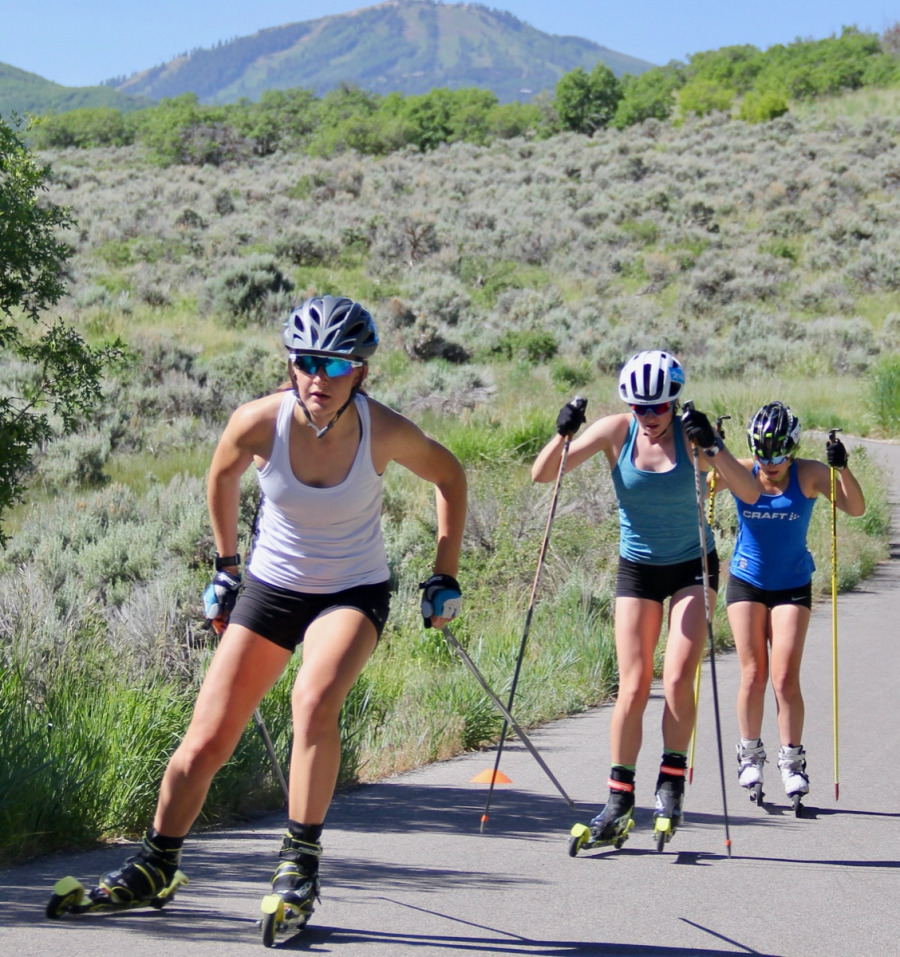
(above is a video from a recent controlled L3 session with the BSF Pro Team. Notice the rolling uphill terrain and how the athletes do a nice job separating themselves so they can ski their own 'controlled' pace)
During the first few weeks of the training year we recommend a mix of L3 and L4 interval sessions, however now we transition into a base building phase where threshold training is the priority. From late May – August most of our interval sessions will focus on this controlled L3 training. When we say controlled L3 it means the interval pace should be just below lactate threshold; not at or above.
For most folks this controlled L3 pace should be sustainable for 45+ minutes at a time. Think about a long-distance race pace. (lactic acid in the 3-4 mmol range). At the end of an L3 interval you should not be gasping for breath. Your breathing and muscle fatigue should be under control.... hence the slang term controlled L3. A skier should not feel totally spent after an L3 session, you should almost always feel like you have more in the tank.
Mode:
May and June is a perfect time to have fun with cross-training style intervals such as biking, running, or even swimming. Be aware that your lactate threshold might be different in each one of these modalities because your efficiency is different in each. If anything air on the side of caution and start your L3 intervals several beats below you LT threshold.
Warm Up:
Warming up for intervals
20 min – easy
5 min L2
5 min w/ 3-4, 10-15 second speeds building in intensity
Interval:
4-6 x 5-7 minutes
3 minutes recovery
It’s more important to focus on quality interval time and dialing in the right pace at the beginning of the training year rather than super short recovery time. In general, our recovery time between intervals will decrease as the training year progresses.
In May we start with a short interval time (5-7 minutes) and build in approximatly half recovery time to make sure our body is able to re-set between each interval. Our goal with threshold intervals is to have a consistence pace throughout the entire workout by starting in the right zone and finishing in the right zone. The total interval on-time for the day is what should feel stressful on the body not the duration of each individual interval. (in other words you shouldn't be feeing the need to hang on your poles or put your hands on your knees after each interval to catch your breath) If you feel yourself moving at a slower pace during the last interval than on the first, chances are you were not in a controlled L3 pace.
In May we typically start with 5-7 minute L3 intervals but want to build up to the point where we feel comfortable doing a 7 – 12 minute interval with the same recovery time.
Terrain:
In general, interval terrain will get more race specific the closer to the winter season we get. In May when we are still trying to dial in our interval pace I like to look for very consistent terrain. Very gradual uphills are great for controlled L3 interval terrain.
Goal:
Our goal with controlled L3 training is always to build efficiency. Even if you are doing these intervals in a non-ski specific mode you can still build general efficiency and increase your lactate clearing capacity.
While rollerskiig technique is a huge goal with L3 intervals and we want to get to the point where our technique doesn’t degrade at all through the course of a session. This is the best way to show increased efficiency and strength in our most ski specific training.