
Trigger Blades For Biathlon
By Luke Brown
 Pointed Trigger Shoe
US Biathlon Team Member
Your relationship with your trigger is crucial. This relationship is impacted by both fundamentals of shooting technique such as trigger squeeze, timing, trigger control, and trigger position as well as the actual trigger mechanism and blade. In this article, we’ll focus on the trigger blade itself - what to look for and what to think about when deciding between the various types.
When deciding on a type of trigger blade, we need to discuss the trigger’s purpose. At its most basic level, the trigger is the mechanism through which we tell the rifle to fire. We want to do this as smoothly as possible for the most accurate result. This means we want to take up all the slack we can in the trigger before taking the shot. The best shooters hold the trigger at 90-95% of the pressure needed to fire the rifle while breathing and aiming. Then, when the brain decides it is time to shoot, all that is needed is to apply that last 5-10% of pressure. This creates the least amount of movement in the rifle when the shot actually breaks. Take a look at some World Cup biathletes and check if you can see their finger move when the shot goes. For the best shooters, the movement is so minimal that it’s difficult to see.
How does the type of trigger relate to trigger squeeze and control? The trigger’s construction can improve our ability to execute two important triggering fundamentals: consistency in the position of our finger on the trigger and ability to feel the amount of pressure we are applying.
Here are many of the available types of triggers and what I and some other biathletes think about them:
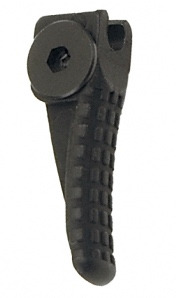
Normal Textured Blade
This is the most common trigger blade - it comes with most rifle setups. Many athletes get used to this trigger and stick with it for successful careers. For me, I found that this trigger does not force me into a consistent position - my finger gradually moved down the trigger for a few months until I was pulling on the tip. The textured surface allows for some improved feel for trigger pressure on a bare finger pad, however this benefit is all but eliminated when wearing a glove. In the end, an athlete can achieve consistency and a good feel with this option, but it takes more awareness and energy.
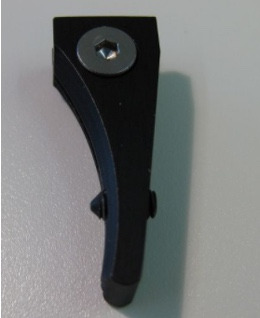
Blade with Pinpoint
Jake Brown (US Biathlon National Team athlete) uses this blade and says, “The trigger blade with ‘pointed screw’ as Fortner calls it (I call it the trigger with the dot) features a pin that projects orthogonally from the middle of the trigger face. The pin is pointed at its tip so that it can be easily located and felt in the pad of the athlete’s trigger finger. As its name implies, it can be screwed in or out of the trigger to increase or decrease how much it pushes into the finger pad. I have mine screwed nearly all the way out so I really feel the point in the pad of my finger even through a winter glove. The advantage is two-fold: I can easily find the same middle spot on the trigger to ensure consistency, and the pin’s pressure in the finger pad allows for another point of feel for trigger pressure. The disadvantage of this trigger is that the point position with the blade cannot be adjusted.”
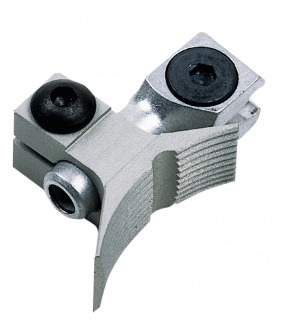
Horseshoe Blade
I just switched to this trigger based on the suggestion of Raleigh Goessling, an experienced USA biathlete of the Craftsbury Green Racing Project. So far, I am enjoying that it forces my finger into the same vertical position for every trigger squeeze. The horseshoe shape also provides for a feeling of control and stability. The slot through the middle allows for some positional awareness on the horizontal plane as well as feeling for trigger pressure. This blade can also be adjusted vertically which could prove beneficial as I dial in my hand position.
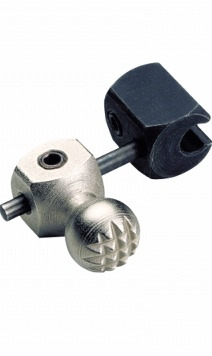
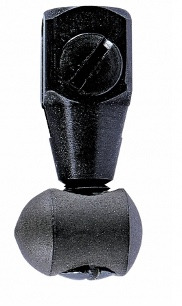
Ball on Stick
Carsen Campbell, a Canadian turned American biathlete and high level shooter uses the Ball on Stick. When asked why he likes this style of trigger, he referenced both our considerations: “It forces the shooter to land on exactly the same spot on the trigger each time. You can feel this well even with gloves on. With a blade trigger, even moving up or down on the blade a few millimeters is going to make a very noticeable difference in trigger weight. It [also] has good adjustability and you can move the ball up and down as well as forward and back and you can change the angle to optimise finger contact for your stock shape, hand size and preference.
Lastly, Campbell mentioned that he is able to visualize pulling this trigger straight backward as compared to levering a longer and more traditional trigger.
This option combines the effect of the “Ball on Stick” trigger with the “Blade with Pinpoint”. It has the pointed end to create a greater feel for trigger pressure. The downside to this trigger blade is that it is not as adjustable as the “Ball on Stick” is.
Some biathletes also create custom triggers based on their own needs and experiences. Look for a variety of trigger blades the next time you are watching World Cup footage.
As you can see, there are many options for triggers. But trigger considerations should boil down to two questions: 1) Does it allow for a consistent finger position? 2) Does it give you a good feel for trigger pressure? I’d encourage you to experiment this spring and early summer with new triggers (perhaps trade with a teammate, since triggers aren’t cheap!) and try to answer these questions for each variety. This is the time of year to try new things and investing in your trigger and your trigger knowledge could be a critical part of your improvement this season.