
December ThReshold - Reverse NatuRal InteRvals
By Andy Newell
Reverse Natural Intervals - L3 Threshold
I know it sounds like a mouth full but Reverse Natural Intervals are a really fun way to do intensity while making the transition to snow. I learned this interval technique while training in Lillehammer with members of the Norwegian National team, but you don’t need to be an elite level skier to benefit from such intervals. Master skiers and Juniors who want to work on feeling more comfortable on skis and increasing your confidence in race pacing will benefit from incorporating a Reverse Natural Interval session into your December and January routine.
Natural intervals are common in running and skiing. Natural intervals mean skiing continuously down a trail or loop and letting the terrain in front of you dictate your intensity. Typically, this means recovering on the downhills and flatter terrain and using the uphill sections to increase your intensity creating various lengths of intervals in varying terrain. All-natural.
This interval session however reverses traditional natural intervals and instead we use the flatter terrain, downhills, and transitional sections as the intervals and recover on the steep uphills. Sound easy? Think again. You’ll find that your heart rate will elevate extremality easily during this session and above all it forces us to practice smooth transitional skiing at a controlled and realistic race pace which will be a huge benefit in competitions.
Session:
Reverse Natural Intervals L3, Threshold 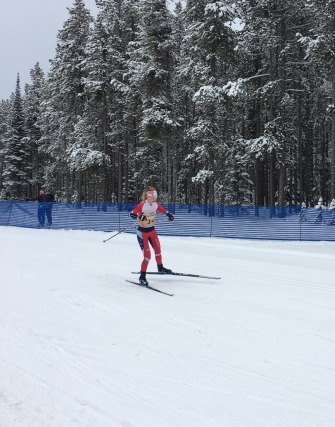
2 x 15- 20 minutes
Warm Up:
20 minutes easy skiing
2 x 5 mins L2
5 x 10 second speeds
Dynamic stretching
Intervals:
Choose terrain that is rolling and preferably on a big loop. 5k race loops at your local ski area usually work great.
Start the 20-minute interval at a controlled longer distance race pace (L3, Threshold pace). Ski all the flats, bumps, transitions, etc. at this L3 pace as well as ski hard INTO each uphill. It’s fine to push the L3 pace on gradual uphill terrain but as soon as the hill gets steep enough to V1 or stride knock back the pace so your heart rate recovers to L2. Catch your breath a little bit on the steep sections of the hill then remember to push hard over the top and continue on at a controlled race pace.
Goals:
Practice using a variety of techniques and gear changes through the flats, corners, and rolling terrain. Think about staying light on your feet and not bogging down and look for ways to gain time and push the pace through the ‘easier’ terrain and recognize when it’s time to ease off the gas and recover when the hills get steep.
One reason why members of the Norwegian National team do this workout is because it helps train a unique style of pacing and one that can be very effective in distance racing. Sometimes mentally focusing on skiing slightly easier on the uphills but increasing your speed over the top and into the downhills, flats, and corners is a perfect way to gain valuable seconds on your competition. Masters and Juniors will find it’s a great way to work on balance and coordination through terrain that might otherwise be used to recover.
Furthermore, this type of pacing will force you to be very consistent in your heart rates and lactates throughout the interval. It is common in intervals to ski just one uphill too hard and flood the system with lactate which results in compromised speed and intensity throughout the rest of the session. Reverse Natural Intervals are a great way to avoid that and work on skiing fast and relaxed.
Lactate goal: 3-6 mmol