3 mental training skills to improve now
By Andy Newell
A lot of skiers ask me what the key is to mental toughness. I find this is always a hard question to answer because so much goes into being mentally tough and mentally resilient. It’s kind of like asking ‘what makes a skier fit?’ when reality it’s a combination of many factors that take years to refine.
The biggest takeaway is to think about mental training the same way we think about physical training. We can’t expect to step to the start line at our first competition of the year and be successful without putting in the work. The same principles apply to our minds, if we want to be tough on race day, we need to be conscious about our preparation and actually practice before the race season.
I’m always a fan of trying to simply training in order to make it palatable for athletes. Sometimes it can be overwhelming to think about all the areas we need to improve. We can however prioritize specific workouts that we know will have the biggest impact on our personal development mentally and physically.
September is a great time to revisit some mental training strategies and consciously use them during interval sessions throughout the fall. Our goal is to refine these neural pathways so when we are in a high-pressure racing environment, we know what to do. Here are the three most I important mental training skills for athletes to think about in the preparation period.
Positive self-talk
An athlete’s internal dialog is probably their most effective tool for success and it’s the backbone of all mental training skills. The voice in our head can either motivate us and help us dig deeper or sabotage our race day with negative and unproductive chatter. Interval days are the best opportunity for skiers to work on their positive self-talk so we can utilize this skill on race day.
Positive internal dialog starts even before the workout has begun. The weather could be horrible, you forgot one of your gloves, or maybe you ran out of your favorite breakfast cereal that morning. The most mentally resilient athletes can catch themselves from dwelling on a negative situation that is out of their control to stay focused on the task at hand. During the interval session is when positive self-talk can really help an athlete’s performance. I encourage skiers to find specific phrases that help motivate them to achieve their best and pump themselves up. ‘You can do this’, ‘You are strong’ ; sometimes the most basic phrases when repeated internally can keep the positive in and the negative out. I personally find that using phrases like this between intervals is really crucial to having a productive session and translates so well to race day.
Internal and external mindsets
An athlete’s mindset is often controlled by their self-talk. Successful skiers need to be proficient at switching between internal and external mindsets instantly and sometimes within the same interval session.
Internal mindsets are good: ‘use your glute muscles’, ‘fill your lungs’ are examples that might help you ski more efficiently. However, the times when your legs might be burning, your lungs are pumping, and things are getting uncomfortable are great opportunities to practice switching mindsets. Instead of thinking about how you feel, think about an external cue. ‘quick hands!’ is an example of an external-mindset technique que. ‘One more hill!’ is a phrase that might help you stop thinking about how you are feeling and keep you in the pain cave. Some skiers will count pole plants or stare at their ski trips. These are the most extreme examples of using external mindsets to manage pain tolerance when you need to push for just a few more minutes. Once again, this is not something you can expect to do during a race if you do not practice beforehand.
You are in control of your emotions
This seems like a simple and broad statement but it’s a fundamental skill for mentally tough athletes. The basic principle is that emotions are feelings you bestow upon yourself and therefore you can mitigate them. For example: A driver cuts you off in their car when you’re driving down the street; are THEY making you angry or are YOU making you angry? Is the pouring rain outside making you feel certain way? Why is the weather making you feel a certain way if you have no control over it? A teammate kicks your butt in an interval session; are they making you jealous or are you making you jealous?
Recognizing but also learning to control emotions is a basic principle of meditation and is something that successful athletes must do to be productive in the long-run and maintain a positive outlook on their race season. Taking a moment to recognize a negative emotion and consciously let it go seems so basic but can turnaround your workout or day instantly.
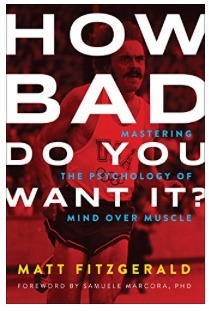
Looking for a good book about applied mental training in athletics? I recommend How Bad Do You Want it by Matt Fitzgerald