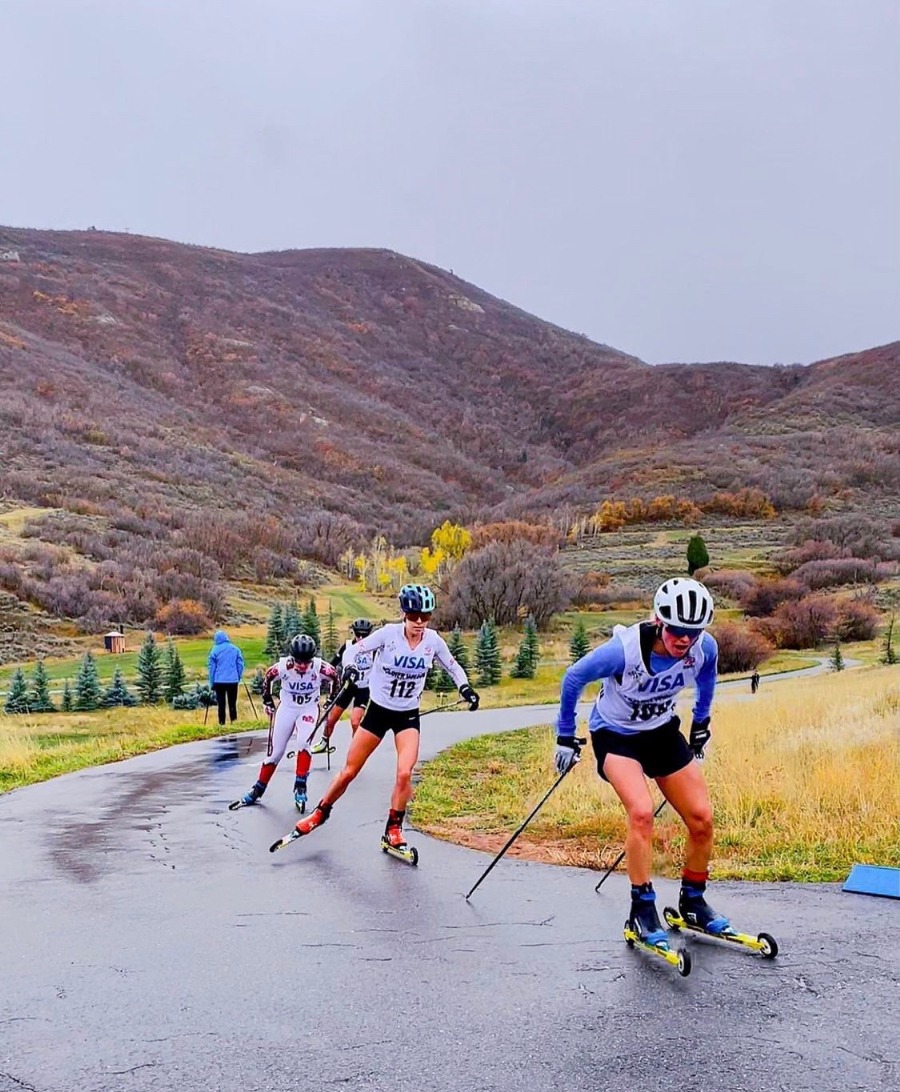
Sprint Pace Project Intervals
Over the past year we have used a 5-kilometer pace project workout to prepare athletes for the demands of middle-distance racing. The origins of a pace project workout stem from track and field, where a runner will perform shorter intervals at the pace in which they ‘want’ to race their actual 5k or 10k track races. It’s part pacing part interval training. The same principles can be used in skiing and in this case sprint race qualification pacing.
Correct pacing in sprint qualifiers is crucial if an athlete wants to put down a fast time. Now, you might say ‘it’s a sprint, just go as hard as you can’ when in fact even the best 100-meter track sprinters in the world think about pacing their events. Pacing is all relative, and as a skier develops and refines more dynamic race ‘gears’ and speeds they need to learn how to pace appropriately.
This L4 interval session is perfect for training an aggressive yet relaxed sprint race pace and helping skiers learn about sprint pacing. Even if you are a masters or collegiate athlete who does not participate in sprinting this is still an important workout to train powerful and dynamic ski technique.
WARM UP:
20 minutes easy skiing
8 minutes L2-L3
Dynamic stretching
SESSION:
3 x 6-8 x 30-seconds w/ 1 minute recovery between intervals
8 minutes easy skiing
5 x 1-minute w/ 2 minutes recovery between intervals
8 minutes easy skiing
4 x 90-seconds w/ 3 minutes recovery between intervals
TERRAIN:
Rolling uphill or a mix of flat and up (transitions are great)
GOAL:
If you have done NTS sprint intensity sessions before you are familiar with 30-second style intervals. These short interval sets are designed to be like a track and field ‘leg speed’. Meaning, it’s a short interval but not meant to be an all-out effort. Essentially, any time we are doing these short interval sets we are breaking up a 4-minute max effort into smaller chunks, so we want to focus on this pacing. During this sprint pace project session all efforts should be based on a speed that is your ideal 4-minute max effort pace.
Our secondary goal with sprint intensity is to build neuromuscular power and get the body comfortable buffering lactic acid. A skier that can surge and then recovery quickly will be more successful in all types of racing scenarios.
Typically, from a training zone / heart rate perspective these intervals are logged as L4 because of the lactic acid demands on the muscles but a skier’s heart rate might register in L3 zones because of the short deration intervals. We like to remind athletes to not worry about what their heart rate is doing during a session like this and instead focus on moving fast and relaxed.