
Forget Balance, Instead Create Focus - Birkie Prep
By Erika Flowers
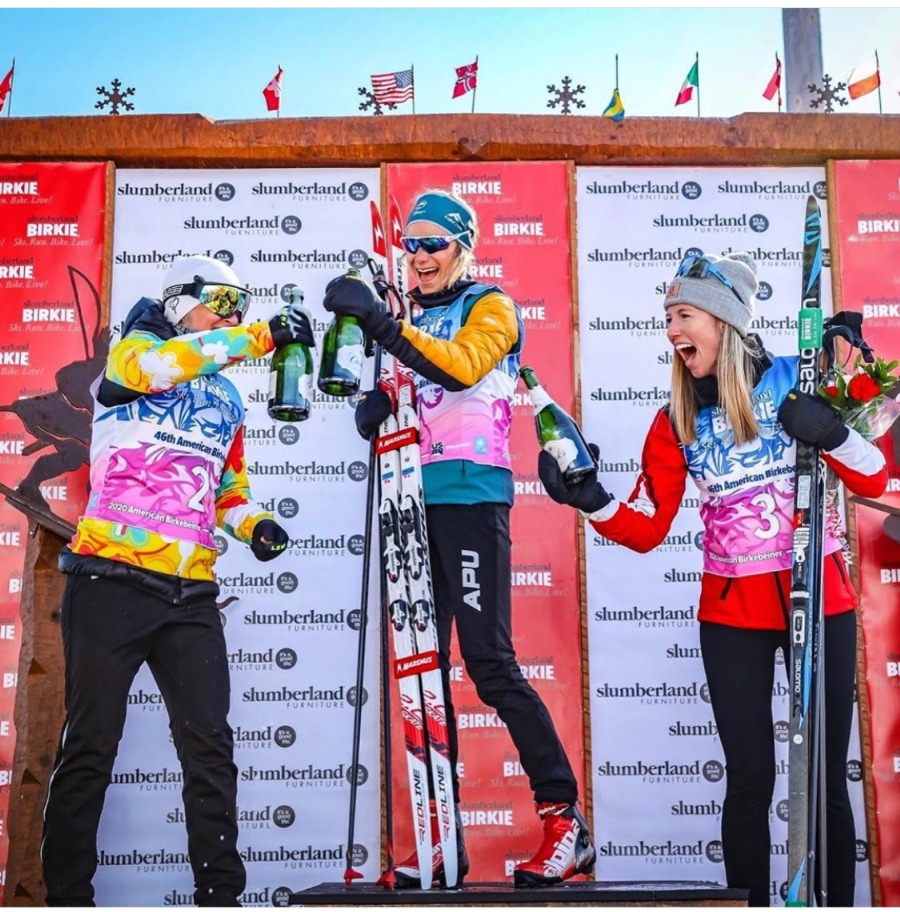
Like many subscribers of Nordic Team Solutions, cross-country skiing is my passion but not my full-time job. Training looks a bit different when it needs to fit around a more structured work schedule, Zoom calls and an inbox fuller than my stomach on Thanksgiving. My days typically start before the sun, squeezing in an early morning strength session and end in the dark, ripping laps around our in-town ski area. Balance is something I’ve left to gymnasts. Instead, I focus on executing three key workouts a week and treat everything else as bonus training! Some weeks I get in double sessions every day and some weeks I’m only able to sneak in those three key workouts but I always ensure I have the time and energy to prioritize those workouts.
My three key workouts are some variation of the following:
1. Quality speed session – traditional speeds or longer 30 second sprint speeds
- Classic or skate, 3X5X10-20sec. speeds with 5 minutes rest between sets
- 2-3 sets of 8X30on/60off – this is more sprint focused and closer to an interval session than true speed but I’ve found it helpful in staying close to faster race pace skiing
2. Quality distance session – at least one day per week I am to ski longer than 2 hours and log some extended volume on snow. Incorporating a longer workout each weeks allows you to carry fitness throughout the season and ensure you have the base for longer races.
3. Quality L3 or L4 interval session – the format for this can vary quite a bit week by week but I incorporate at least one true interval day each week. Below are three of my favorites paired with a 15-20 minutes warm-up and 10-15 minute cool down to keep the workout short and sweet.
- 4-5X8min. controlled L3
- 1,2,3,4,4,3,2,1 L4 with equal rest (1 min. interval followed by 1 minute rest, 2 minute interval followed by 2 min. rest and so on)
- 4-6X6min. L4B (controlled race pace but faster than L3)
The key to this type of training is bringing a specific focus to each session by taking the time to think about your goal for the workout ahead of time and reflect on how the session went afterward. Treat yourself to some fancy new pens and a notebook that makes you smile and use this three things exercise to help level up your training. One of my favorite athletes, thought leaders, authors and college sorority sisters Alexi Pappas says first actions change, then thoughts, then feelings. I like to use this framework as a guide for setting goals for a session.
1. Prior to any session, write down three goals for the workout.
- ACTION: Your first goal should be focused on the action you want to take during the session. What do you want to DO during the workout? Examples:
i. Push off my toe to extend my leg on every push
ii. Crunch with the upper body
iii. Bring hips and hands up together
iv. Carry the V2 a pole or two higher up the hill than I usually would
v. When it hurts, smile!
- THOUGHTS: Your second goal should be focused on the mental component of the workout – what mindset do you want to bring to the session? What do you want to be THINKING during the workout? Examples:
i. Remember this is your strength.
ii. Focus only on the 30 meters ahead of you.
iii. Be present and show up to win.
iv. Think quick quick quick.
- FEEL: Your final goal should be focused around the feeling you want to bring to the session. How do you want to FEEL during the session? You can also set action goals here to generate this feeling. I’ve found this to be extra helpful on days where I know I’m tired and have had an extra long workday. It can be frustrating to start a workout and see a suppressed heartrate (a sign your body is not fully recovered). On these days I like to focus on feel rather than HR and I’ve found I often surprise myself and end up having a great workout as a result. Examples:
i. Start faster than feels comfortable – feel like you are stretching yourself.
ii. Focus on skiing smooth and sustainable.
iii. Imagine feeling like a racecar zooming around the corners.
iv. Feel the joy of sliding on snow!
2. The more important work and learning comes after the session. Spend a few minutes writing down three things that went well. If your body felt bad, did you at least keep your self-talk positive? Did you nail the effort on each interval? Did you have a breakthrough in technique? We spend a lot of time looking critically at how we can improve but I’ve found its just as important to recognize the areas where we are improving and doing well. For every three GOOD things you write down, you can also write down one area of improvement.
When working full-time and trying to manage the competing demands of life, work, and training, time comes at a premium and maximizing the value of any workout becomes extra important. I’ve found the 5 minutes I spend a day on the exercise above to be the most valuable tool I have in my toolbox when looking to bring better focus and generate better outcomes in both racing and training. I might not be able to train 800 hours a year but I can make the most of the 400-500 hours I am able to get out on the trails and in my experience, quality nearly always trumps quantity.