
Shoulder Season Training Tips and Replacements
By Andy Newell
No matter where you live, November can be a tricky month for productive training. Some of us might already be sliding around on real snow, others might still have several weeks before their first real skiing sessions, but we all need to be creative in November to make sure we are maintaining high quality workouts and not wasting valuable training time.
Shoulder season can surprise us with less than ideal training conditions at any moment. Is it better to strap on rock skis and slide around on an inch of snow at the local golf course or try to find clear roads for rollerskiing? Running intervals on a treadmill or hike with poles up a snowy peak? The answer might depend on how adventurous you feel, but there ARE definitely certain workouts that will be more productive for our fitness.
Ideas for Indoor Sessions:
I am typically not an advocate for working out indoors but if it’s 36 degrees and raining outside it occasionally can be a better option for maintaining your health and fitness.
Distance runs on the treadmill:
When going for an easy distance run on the treadmill I recommend mixing up the grade and speed (just like you would out on the road) It can be a common mistake to just keep the treadmill set at the same flat or gradual grade, the same speed, and just zone out. This can easily lead to overuse injuries in the calf or achilleas because we are using the exact same muscles and stride throughout the whole workout. Mix things up, just like you would on terrain outside.
Hiking sessions on the treadmill:
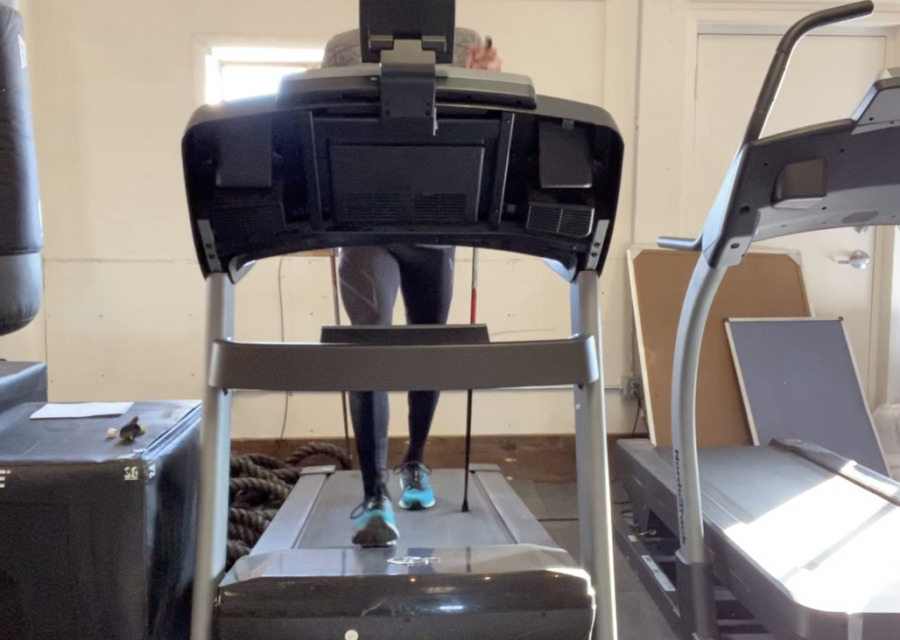
Because it can be hard on the body to crank out a few hours of running on the treadmill, if I am forced indoors I will often opt to hike on the treadmill instead. Most decent treadmills these days can achieve a pretty steep include and a hiking session can be a good strength building exercise too. Set the incline to a steep grade and mix up the grade between 12- 16% and ease into a L1 pace.
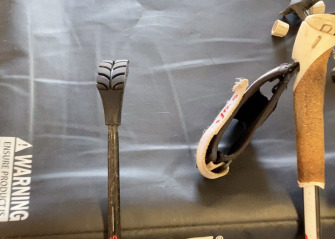
One of the best additions to treadmill workouts that I have found are these Leki pole tips. They have a rubber bottom similar to a tire or shoe sole. (using normal pole tips on a treadmill would most certainly ruin the belt) They can pretty easily fit on just about any kind of pole since the rubber can stretch slightly. Remember to secure using a heat gun and pole glue. I was able to use them on my swix triacs, and it allows me to do distance hiking and ski walking sessions on the treadmill. Even bounding intervals!
Most treadmills are just wide enough to allow using poles like this. Some models are shorter than others but look for the longest treadmill platform to prevent your poles from slipping off the back.
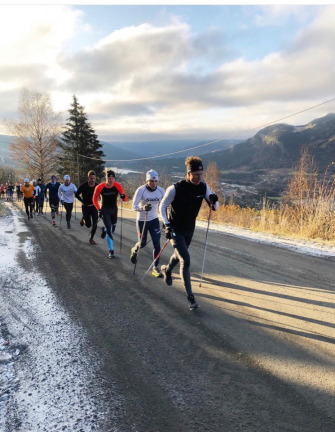
Typically if I am going to train L4 and the early skiing conditions are too thin and inconsistent to allow me to push myself hard while on skis, I will opt for outdoor bounding intervals instead. L4 and L4B bounding sessions are super common for skiers in October and November. Even when the snow arrives bounding can be the best modality to log L4 intensity. Remember, We want to get comfortable on snow skis before we start hammering intensity. I recommend spending at least 5-6 days focusing on easy distance snow skiing, and light speed training before implementing intervals on snow.
When the snow arrives, don’t forget about speed and power:
In my experience it can be easy for skiers to let their speed and power training slip through the cracks once the early season snow hits. Even at my age I get super stoked for the first skiable trails of the season and will try to ski as early as a possibly can. It's safe to say I've trashed my fair share of skis over the years.
Often the early season skiing terrain isn’t the best for doing speed or specific strength training. Soft poling, inconsistent terrain, or bumpy and uneven trails can prevent us from getting in our weekly speed sessions.
Remember to implement at least one speed based session per week. If outdoor conditions are nasty replace a rollerski ski speed session with a Skierg session or stationary spin bike w/ 10x 10-15 sec accelerations.
If the roads are dry, double pole:
During the first snows of the year there will be times with the roads are most definitely off limits for rollerskiing. But there will also be times when the snow melts off and the roads are clear again. I like to use these days as opportunities for double pole and specific strength training. Early season snow skiing can often be slow and punchy, so we lose the opportunity for good double pole training. Taking advantage of dry roads and using them as specific strength days can help you be even stronger once the skiing conditions firm up and stabilize.
Generally classic roller skis will roll better even when the roads have a fair bit of sand and grit on them. If you still don't feel comfortable rollerskiing in shoulder season conditions make sure to incorporate some SkiErg specific strength: Videos Here
Foot Speed:
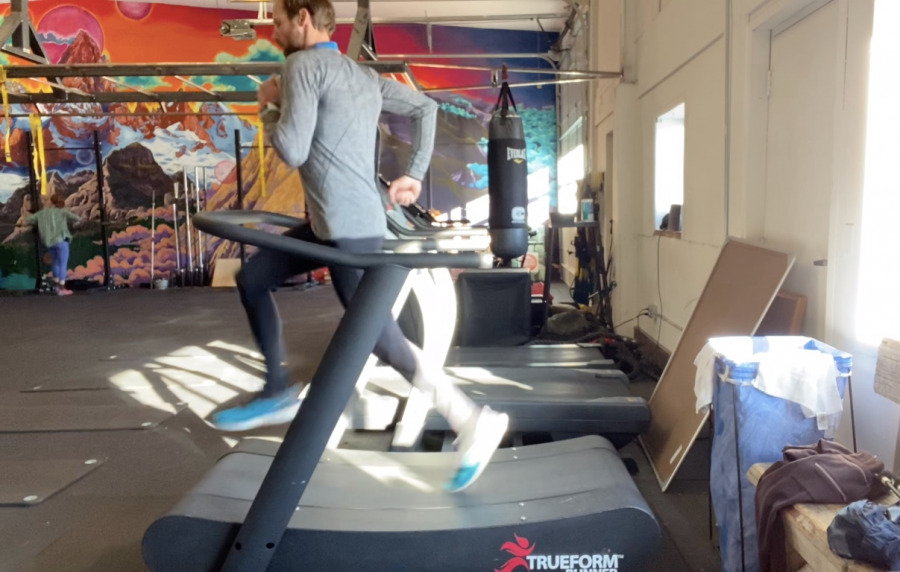
If the snow conditions are too poor for good speed training, and the footing outside is too snowy for rollerskiing OR running I recommend throwing in some foot speed before strength sessions. The best way to do running speeds indoors is to use a self propelled treadmill. They are getting much more popular these days and are available a most gyms. I use the Trueform model at Mountain Project for 10 – 15 reps of 10 seconds sprints to help maintain speed during the shoulder season.
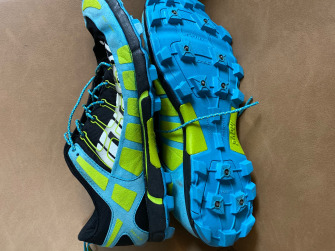
Here at NTS we are big advocates for foot mechanics warmups and plyometrics before skiing sessions. Doing these on snow and ice can be a real challenge in normal footwear, while at the same time just doing them indoors and not before our skiing sessions feels less productive. A good option for outdoor jumping and sprinting during shoulder season and winter are spike shoes. They work WAY better than simply sliding a yack track over your running shoe. These things will actually grip snow and ice making morning mechanics and jumps way more effective. Both Inovate and Salomon make great spike shoes. Just remember to take them off before you walk across your wood floors:)
Shoulder season can be fun when we keep things in perspective. Remember that it's OK to stray from the recommended training plans and reduce training hours if forced indoors. Get creative and create fun training sessions that use various training modalities.
As always, email me through the contact form if you have questions about how to modify your training during shoulder season.
Andy