
Orthotics in Ski Boots - Yes or no?
By Kurt Jepson,
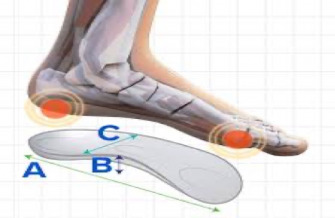
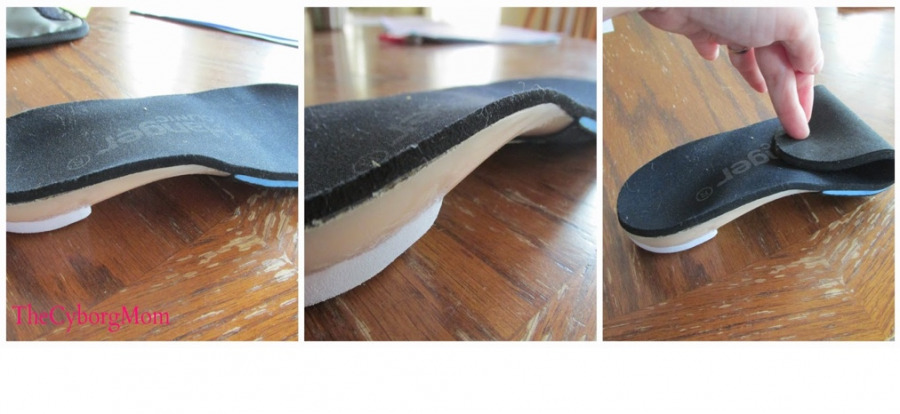
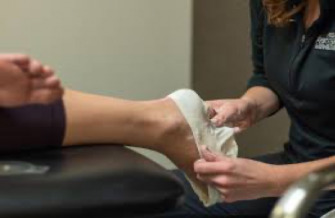
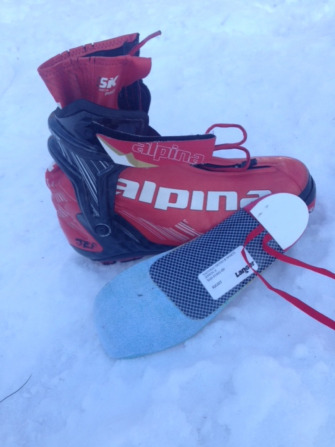
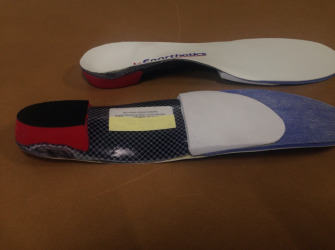
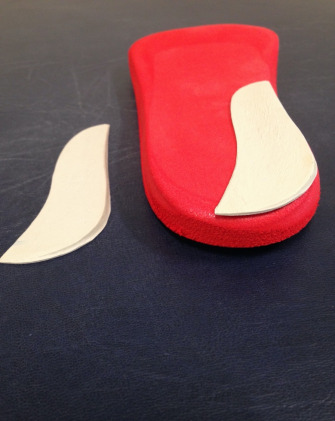
Skiers spend a considerable amount of time and resources on making their equipment as efficient, specific and comfortable as possible to enhance performance and the overall skiing experience. How ones` ski boots fit and perform certainly should be included in this endeavor.
“Boot fitters” and their skillful adaptations have been part of the alpine skiing world for decades. Nordic skiers have also implemented “custom” footbeds for years to improve comfort and efficiency of movement. Both disciplines have similar goals, namely, enhancing the athletes “feel” for the snow/ski interface when edging or riding a flat ski.
Replacing stock footbeds in one`s skate specific boots can be an expensive acquisition. The consumer should have a basic knowledge their specific biomechanical needs, insole materials, fabrication and design application.
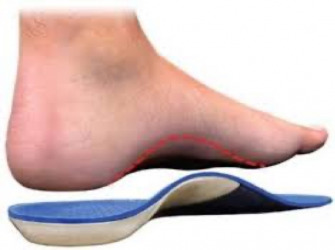
First, a footbed is NOT an orthotic. Medicinenet.com adeptly defines an orthotic as; ” Orthotic: A support, brace, or splint used to support, align, prevent, or correct the function of movable parts of the body. Shoe inserts are orthotics that are intended to correct an abnormal or irregular walking pattern, by altering slightly the angles at which the foot strikes a walking or running surface.”
By definition a “blank” (uncorrected/canted) footbed has minimal abilities to,”….alter slightly the angles at which the foot strikes ,…..a surface.” The “surface” we are concerned with in this discussion is snow. A true orthotic influences foot motions through contact points at the forefoot and /or rearfoot using canted “posts” measured in degrees ,or alternately via “graded” midfoot/arch control.
The benefits skiers hope to gain from an orthotic foot appliance include;
-Symptom alleviation or prevention
-Maximizing intrinsic biomechanical efficiency via enhanced joint congruency/stability and muscle action
-Maximizing ski efficiency via edge engagement, release and recognition of a flat ski
-Improving balance
-Metabolic cost of movement
A ski specific device does not share all characteristics with an orthotic designed for running and although most users freely shift their orthotics from running shoes to ski boots, there may be tradeoffs. The most obvious biomechanical variances are the lack of heel strike with skiing and the requirement to position the ski flat during the glide phase (in this case skating). Also, propulsion in skating results from a lateral push, not toe off as in running.
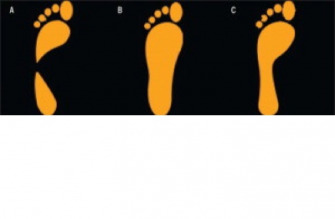
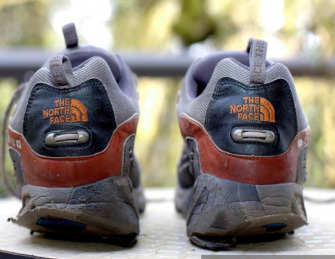
We will limit our discussion here regarding in depth foot and ankle biomechanics, but I would urge the reader to review a June 2019 Nordic Solutions post on “Matching Running Shoes to Foot Type”. The section on “classifying” your foot type is particularly pertinent to our discussion here. Identifying whether you own a “compensated” or “uncompensated” foot will drive your ski specific orthotic selection. The “Wet Test”, examining footprints in sand, callous distribution on the soles of your feet and shoe wear patterns all provide useful information to allow assessment.
Wet Test : “Uncompensated” foot left to “compensated” foot middle, “neutral” right.
“Uncompensated” foot type shoe wear below.
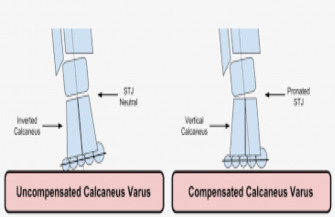
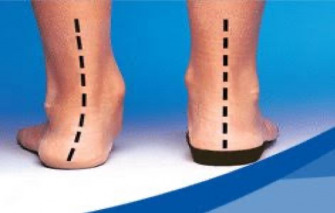
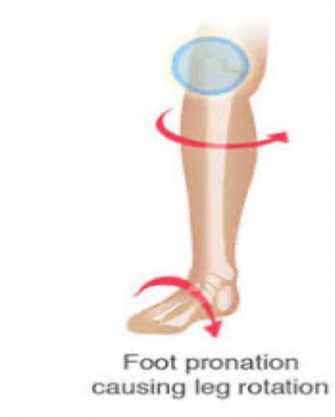
Below are depictions of ankle/foot compensation during the unilateral midstance phase of the gait cycle as viewed from the rear. This translates to the glide phase of skiing. In the case of medial/inside loading, pronation is accentuated by the ankle flexion required in skiing.
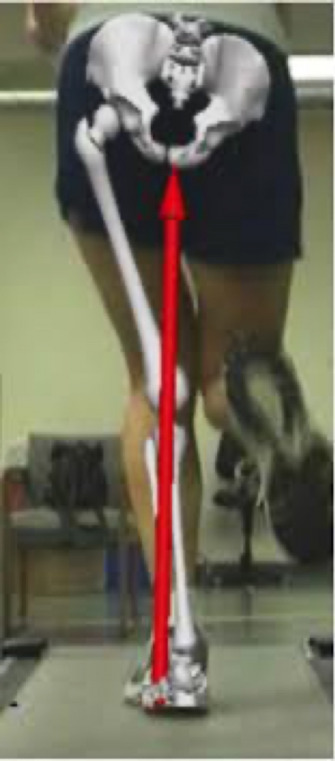
The diagram above on the left (uncompensated), illustrates the issue of potential delay and/or inadequate engagement of the inside edge during skate propulsion. This is followed by the challenge of obtaining a flat ski during glide due to outside edge loading. Both scenarios require proximal adjustments from the hip and core increasing metabolic cost.
Conversely in the “compensated” foot (on right), loading the inside edge is not problematic, getting off it during glide is! The typical proximal response in this case is dynamic and structural instability of the limb, balance compromise, and abbreviated glide. Dragging the outside or inside edge and inefficient edge engagement/release depletes energy and compromises speed.
A properly fabricated and corrected/canted orthotic will in essence “bring the snow up to the ski” assisting in uniform surface area weight transmission and/or “block” unnecessary collapse inward/medially.
In the case of the “uncompensated” foot, an orthotic enhances the balancing of the ski surface load. Materials should be semi rigid to help transmit lateral push. As there is no sequence of heel strike, they do not need to be accommodative (soft) to vertical loading. Control needs are best met by influencing the midfoot. This is referred to as a Maximal Arch Subtalar Stabilization (MASS) device. They lack fore- or rearfoot cants/posts which would further block available pronation. The arch should have “give”. There may be boot volume issues with this type of orthotic.
MASS device below.
An orthotic specific to the “compensated” foot will help “block” excessive collapse
medially/inward (Genova and Gross, 2000) which results in “plowing” of the inside edge,reduced glide time, instability, speed reduction and heightened metabolic demand. They encourage quicker edge release at terminal propulsion. Materials can be quite stiff (ie carbon fiber) but do need to be tolerated by the user.
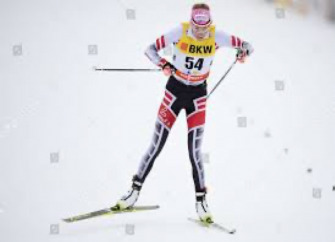
Below: examples of medial loading and edge drag. Note internal rotation hip and knee valgus/inward angle.
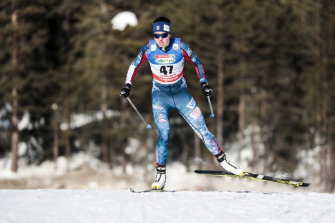
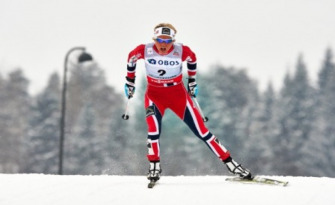
Below: Why is Johaug fast?
There are certainly other factors contributing to a stable and balanced position on skis, including core and hip strength, but foot and ankle positioning toward neutral is an important component and may help offset intrinsic flaws. The entire lower limb is best thought of as a closed system where distal ground forces impart obligatory multiplanar motions and hence related muscular responses as you work up the chain.
The reverse is also true as dynamic core and gravitational forces induce reactions distally to the foot and ankle. Orthotics have been shown to have beneficial effects on lower extremity dysfunction and kinematic efficiency leading to symptom abatement.
Some references below:
EFFICACY OF FOOT ORTHOTICS
• n=180,various LE Dx,33%complete relief,50%
at least 90% relief,1 yr after use
(Blake and Denton,1985)
• n=50,various running injuries,72% improvement with
FO`s,cavus feet benefited least
(D`Ambrosia and Douglas,1982)
• n=180,various injuries,78% improved with FO use
(James,et al,1978)
• prospective study found 83% satisfaction with FO use for
LE injuries,(Moraros and Hodge,1993)
- Reduction mean calcaneal eversion angle by 2.2 deg while walking
(Genova and Gross, 2000)Hip abductor and rotator weakness affecting foot/ankle position, below:
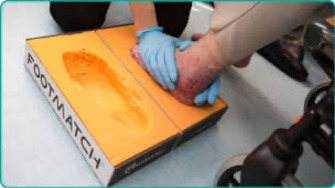
The degree of correction, or angular positioning, of the skier`s foot is where the “art” of orthotic prescription comes into play. Any ski shop can take an impression or collect CAD data and fabricate an appliance “made just for you”. There are pitfalls to these fitting approaches.
Weight bearing fitting protocols (foam impressions or force plate devices) tend to feed into the very malposition the foot succumbs to during the loading phases of skiing.
The degree of control/canting should not only be specific to measurements but also their skiing technique. Analysis of frontal and lateral video can be a useful adjunct when combined with physical exam of the lower quadrant. Identifing architectural verses dynamic alignment issues can be vital to orthotic prescription and achieving a favorable outcome. In my practice I often “under correct” ski specific orthotics acknowledging that full corrective canting (as I would for running) may adversely influence the athlete`s ability to seek an edge or a flat ski.
Material selection for the appliance is also important. Thermoform devices often consume boot volume and if too soft, rob impulse energy to compress before the skier`s action can act on the snow ski interface. The heel to toe height ratio (referred to as “drop” in running shoe design) also tends to be excessive in foam and thermoplastic orthotics.This can detract from ankle dorsiflexion so vital to good skiing position. Foam devices also lack torsional rigidity.
For skating I prefer a carbon fiber chassis with posts/cants matched to the skier`s exam, goals and technique. These are fabricated from a cast mold. With non-weight bearing casting, the clinician can position the foot in a precise manner, and “under correct” (or not) as desired to enhance gliding and efficient edging when utilized in a boot. The fitting procedure is more involved and often there is an outside lab cost, but the concerns of volume/fit, rigidity and drop are negated. Additionally, they are light weight, stiff and responsive.
Suitable “off the shelf” options are possible based on the intended use, biomechanical issues and skier experience, but recall that a footbed is NOT an orthotic. Some “blanks” can be adapted with corrective posts/cants specific to the skier`s clinical measurements but still require a “biomechanist`s eye”, preferably one familiar with the sport.
I recommend a “break in period” for any skier who has not used orthotics previously. This could be a matter of a few days involving intermittent and cumulative hourly usage, or weeks in those requiring more substantial (> 6 degrees) correction. In the case of the latter, the break in period should occur over the spring and summer during roller skiing. The same applies to the athlete who is in the middle of their comp season.
Orthotics for use in skate boots are a recommended addition to any serious skier`s gear list. Likewise, for those who have a history of biomechanically related injury. They should be prescribed by a sports medicine clinician or orthotist familiar with the mechanical demands of modern skate technique. The process should not simply mimic that utilized for runners. Materials should be biased toward rigidity and a low profile. Off the shelf devices may suffice in some cases if adapted to the individual.
Next, considerations for Classic Boot orthotics. Enjoy the “Blue” days of January!