Thoracic Mobility
By Ned Dowling
The thoracic spine consists of 12 vertebrae situated between the low back (lumbar) and the neck (cervical). These vertebrae also serve as the anchors of the rib cage. All of the vertebrae in the spine articulate with their neighbors above and below. The amount and direction of motion is largely determined by the orientation of the articulating (facet) joints; however, the mobility of the thoracic spine is greatly affected by the rigidity of the rib cage. As a result, flexion and extension (bending forwards and backwards) and side bending are relatively limited, but rotation is retained and is a very normal part of walking and running biomechanics.
As with most things biomechanics, the movement (or lack thereof) of one thing affects the movement (or lack thereof) another. Rotation in the thoracic spine is very much affected by posture and flexion of the spine: If you’re not already, sit with a neutral spine posture. Cross your arms with hands on opposite shoulders. Rotate your trunk to the left and to the right. Make a mental note of how these movements felt. Now let your back flex forward in a slumping position. Try the same rotation to the left and right. They likely felt different. When the thoracic spine is flexed, its ability to rotate is decreased. Our cohabitation with gravity, prolonged sitting, and daily tasks (driving, iPhoning, computering) tend to push us into slumped postures with a flexed thoracic spine.
When the thoracic spine has limited mobility, rotational motion, like with running, will be forced into the lumbar spine which has very little rotation motion available and will likely be less tolerant of this load.
The head and neck, being perched on top of the thoracic spine, are at the mercy of its position. If the thoracic spine is overly flexed, the cervical spine will have to extend beyond neutral to just keep the head level. This may also create loads that are not well tolerated.
With all that said, plus this study which found that the addition of thoracic mobility exercises decreased incidence of low back pain in cross country skiers, it’s probably a good idea to have some thoracic mobility exercises in your daily routine. These four exercises offer a mix of rotation, side bending, and extension.
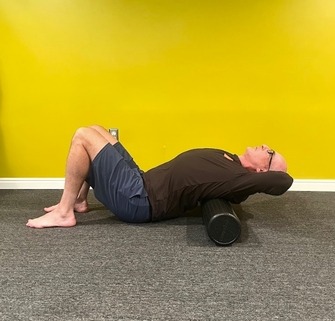
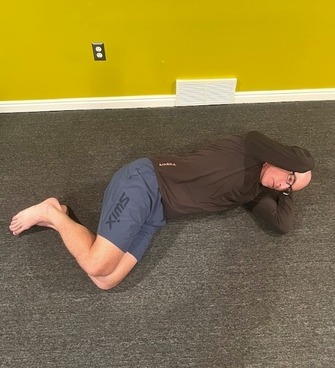
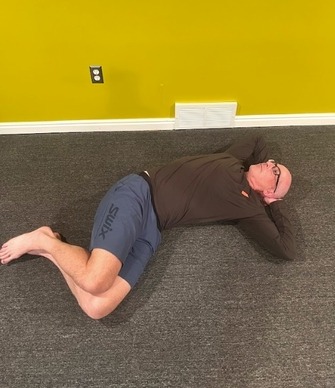
Book Openings: Begin lying on your side with
your knees bent and hands behind your head. Rotate your trunk like you are trying to get the top shoulder down to the floor. Pause here for a second or two and return to the starting position. Reps: 10x on each side.
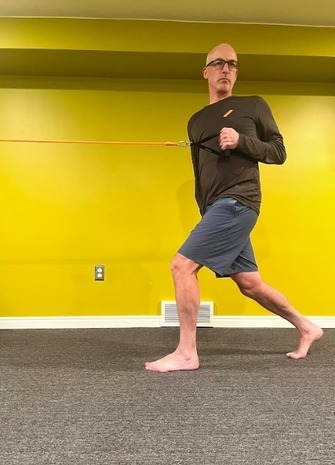
Unilateral Row + Rotation: Stand in a lunge/split squat holding a resistance band (or cable machine handle) on the same side as your front leg. Simultaneously pull on the band and rotate your shoulders/trunk towards the band. Your pelvis and hips should remain pointed forwards throughout. Resistance should be in the light to moderate range—the intent of the exercise is mobility not muscular fatigue. Reps: 2 sets of 10x on each side.
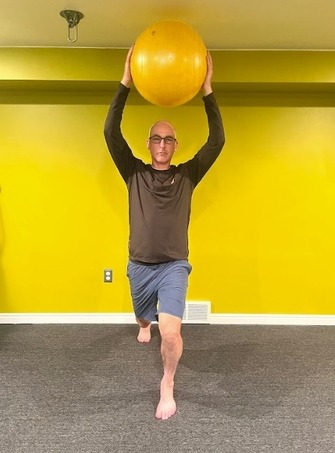
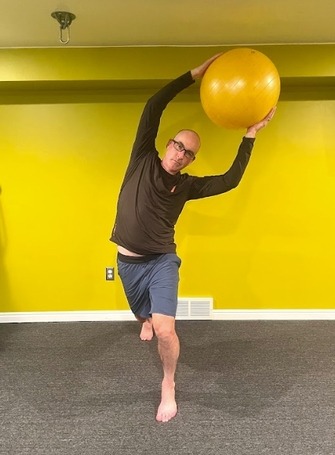
Bucket Pours: Stand in a lunge/split squat
holding a ball overhead (you can substitute any lightweight object that’s readily available and easy to hold onto: yoga block, frisbee, pillow, etc). Imagine the ball is a bucket of water. You’re going to pour the water out of the bucket by bending your trunk to the side of your front leg. You don’t want to get wet, so you’ll need to reach out to the side to empty the bucket. Reps: 2 sets of 10x on each side.