
Tips for Racing at Altitude: From a Flatlander
By Hannah Rudd,
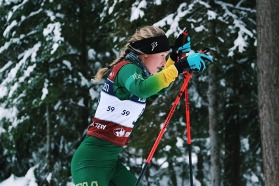
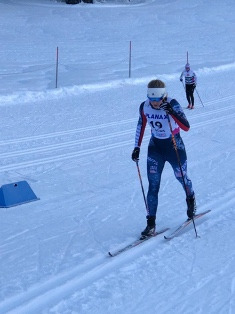
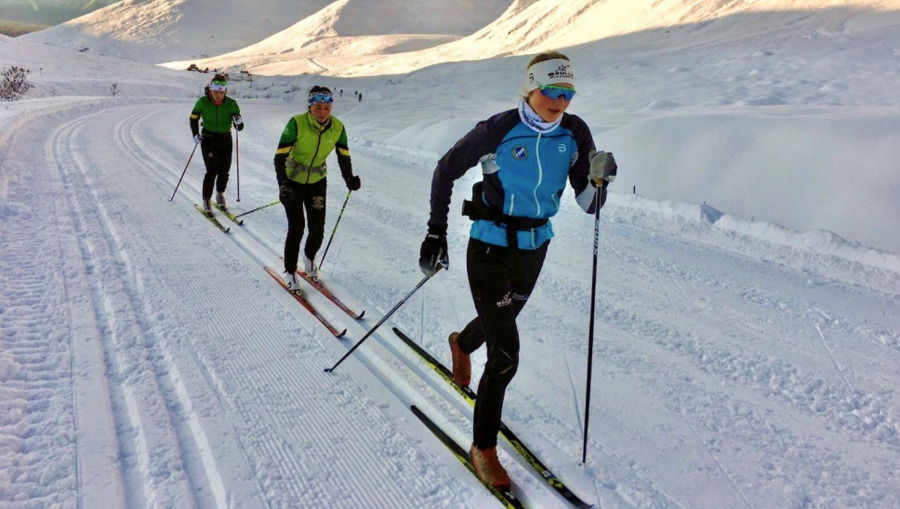
Growing up in the flatlands of Minnesota, the thought of having to race at altitude was absolutely terrifying. The fears around pacing, acclimation, breathing, and blowing up mid-race are all concerns that have swirled around my head when I first started competing at high elevation races.
If you were to ask different skiers about their “secrets” for successful racing at altitude, you would likely get an overwhelming variety of responses - some of which could seem quite insane. When it comes to altitude, I know racers that like to arrive at their venues three weeks early, and others that prefer to show up the day before. I have had coaches guide me in different breathing patterns and techniques to get rid of the extra CO2 that builds up in the body when at altitude. I have friends that insist on eating piles of beets and liver paste before their races and know others that try to lose weight before traveling up in elevation. A lot of people completely change their race strategy, yet others change nothing at all. If you are from sea level and are new to racing at altitude, this cocktail of ideas for success could seem very confusing and could leave you even more stressed about your competition. Although there is no “1-fits all” protocol for racing at altitude, there are a few things that I have found to be extremely helpful over my years of racing.
After graduating from high school in Plymouth, Minnesota (elevation: 866 ft), I ventured up to the last frontier to compete for the University of Alaska Anchorage Ski Team (UAA). Anchorage is located at approximately 120 feet above sea level, so I was once again living at a very low elevation. For those who are unfamiliar with collegiate skiing, the UAA Ski Team competes within the Rocky Mountain International Ski Association (RMISA) Region, which is made up of schools from Denver, Boulder, Bozeman, Salt Lake, Fairbanks, Anchorage, and formerly, New Mexico. Because of Anchorage’s unique geographic location, our team was constantly traveling down to the lower 48 for almost all our race weekends. As one could imagine, traveling from sea level to 8,000+ feet can be quite a shock to the system; and if you’re like me, it can result in some horrific races. Those that watched me ski some of my first races at altitude can attest to my many mistakes.
Although I am still no expert at altitude racing, I would say that I have made almost every mistake in the book, and because of that, I have learned some helpful tips along the way:
Pacing is Important
Although this one is a no-brainer, I believe that the importance of pacing is often overlooked by many sea level athletes that are new to racing at altitude. In my experience, the higher the elevation you are skiing at, the more it will pay off to start a bit more conservatively. Beginning a race slower than you usually do can be stressful, as you might feel you should be going a lot harder. However, halfway into a race, you’re much more likely to be feeling fresh which will allow you to start passing people that started off too hot. Personally, I like to ski extra easy on the uphills at the beginning of these races to make sure that I don’t dig too deep into my L4 and blow up. Every course and distance requires different pacing and tactics- sometimes starting off super conservatively won’t make sense. However, I would say being a tad more conservative at altitude is usually a good approach- especially for newer skiers.
Traveling to elevation 3 weeks before a race is not absolutely necessary
The timeframe for arriving at a high-altitude ski venue before a race is something that varies drastically from person to person, coach to coach, and team to team. I have seen many sea level teams and coaches become so stressed about racing at altitude that they head out the race location 3+ weeks early. From my personal experience, and from watching other athletes, this approach can be impractical and often not very successful. Although this is not the case for everyone, I have seen countless athletes arrive to a race location super early and then become fatigued and flat by the time the race rolls around. When you’re not used to training at elevation and when you’re out of your normal routine for so long, arriving to elevation 15+ days early can start to take a toll on your body. Personally, I’ve had successful races two days after arriving at altitude as well as after two weeks. Since everyone’s body responds differently to altitude, I think it’s important to learn how your body specifically reacts. One way that I have done this is by keeping a journal when I travel up in elevation for camps and races. In the notebook, I jot down how I feel each day, how I slept, how my training session/race went, as well as recording my resting heart rate and my percent O2. If you keep track of this data during several trips to elevation you might begin to see patterns in your body’s response to altitude. Perhaps you consistently have a high heart rate and feel sluggish on your fourth day after arriving to altitude. Or perhaps you realize that you typically feel really good during your first three days at altitude. With this information, you can better plan out how early you need to get to a venue to feel your best on race day.
Hydration, Electrolytes and Carbohydrates are Extra Important
Although making sure that you’re drinking and eating enough is important at sea level, I believe it is EXTRA crucial at altitude. When I first started to travel up in elevation for races, I would tend to get bad headaches and get tired a lot easier. I’ve found that sipping on electrolytes throughout the day pretty much eliminates this problem for me. Because the air at high altitudes is dry, sweat evaporates of this skin very quickly. Knowing this, increasing water and electrolyte intake is very important for athletes. I usually bring sports drinks like Gatorade, or Nuun with me when traveling to races. Along with increasing water and electrolyte intake, I have also found it very important to increase the amount of carbohydrates that I’m consuming. When at altitude, your body is working harder than usual and is using more carbohydrates for energy when compared to training at sea level. I’ve found it helpful to boost my carb intake just a bit so that my body has a readily available source of energy and to prevent bonking.
Try not to over think it
I think the biggest thing that holds me back when I race at altitude is my own mind. I have had situations where I’ve become so overly stressed about a race and the elevation that I would psych myself out and perform poorly. I used to overthink every detail and give myself so much anxiety- continuously reminding myself that I was at a disadvantage. Although it is good to take the elevation into account when prepping for a race, I also believe that overthinking the situation and trying to re-invent the wheel can hinder your results. Perhaps you are not a person that gets easily stressed before races. However, if you are like me, I would suggest not overthinking things when racing altitude. Something that has helped me is to simply focus on the things that I can control: making sure I have been fueling with electrolytes and enough food, making a smart and adaptable race plan, and getting in a good warm up. Stressing any more about the things out of your control (like the altitude) will do you no good and will likely hinder your results.
These are just some ideas that have worked for me over the past few years. Perhaps they will benefit you in your races, or perhaps you will find other strategies that better suit your skiing. The best way to get better at racing at altitude is to simply race at altitude. The more you do it, the more you will learn, the more comfortable you will be, and the easier it will become.