Can we train our breathing?
By Andy Newell
This time of year ski teams from around the world will implement more high intensity training into their weekly schedules. L4 intervals and time trials are a perfect arena to practice something very simple that does not get enough attention. BREATHING.
As I like to mention to athletes: 'Your lungs are there, use them'. Maybe for some athletes there is a stigma around loud heavy breathing, maybe we become accustomed to suppressing our breath during the training months to keep intensity sessions controlled. Either way, it's time we take pride in our pipes and use our lungs.
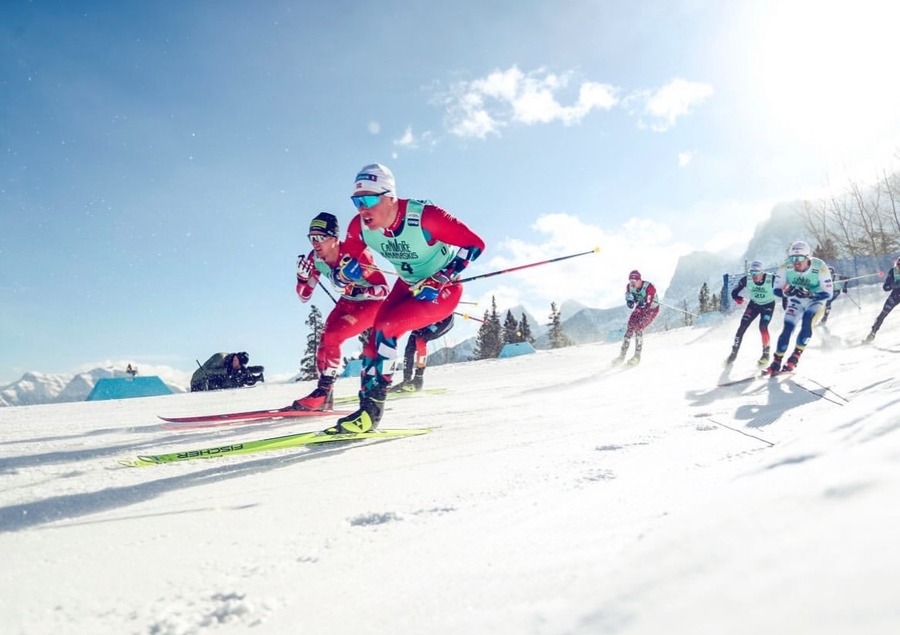
Now, as a coach who stands on the side of the trail during races I can hear when athletes are really accessing the capacity of their lungs and when they are not. One thing athletes don't always realize is that the skiers who are moving well are also breathing well. Often the fasters skiers in the race are the loudest breathers! I think of hearing Jessie Diggins ski by. I was reminded of this recently at Soldier Hollow during the Shutzenski races when Martin Nyenget smash up Hermodes on the first lap of his race. Even at 2k into the race he was breathing notably louder and filling his lungs better than anyone else out there.
I like to remind athletes of this during fall training so we can use interval days and time trials to practice our breathing. Effective breathing during high intensity is a skill that can be trained. It's not about breathing harder; it's about filling your lungs more effectively and staying relaxed while you do it. Some of the most fit skiers in the world can fill over 7 liters per minute into their lungs at high intensities.
Here are some of the ways I cue athletes:
- stretch and relax your torso and feel what it's like to pole hard while breathing from the diaphragm. (belly breathing)
- Instead of thinking about breathing in harder, think about strong purposeful exhales while at intensity. If you get air out effectively, it’s naturally easier to full the lungs to their fullest each breath.
- Practice purposeful breathing in preparation for harder burst and uphills. (Think back to Martin Nyenget breathing like a freight train 2k into the race) Sometimes we need to force ourselves to breathe a little harder than what our effort level is. I always use this strategy in the first half of sprints to prime myself for when things get really tough.
Over the years I have experimented with breathing exercises to supplement general ski training. We know that rhythmic breathing can help relieve stress and help with recovery. Diaphragmatic breathing has been shown to increase performance (See Diaphragmatic Breathing post) . Considering our lungs are such a crucial part of xc skiing should we consider other ways to strengthen them?
I think it's important to learn as much as we can from other sports. Breath training has long been a cross-training technique for water sports thanks in part to Laird Hamilton. Laird has long been an advocate of structured breath training through his XTP training programs. I have also included a recent interview with Hamilton where he discusses some of breath work.
In the past few years breath training has gained more traction in endurance sports, particularly cycling due to the static and crouched position of the torso while racing. Read more here
One of the tools I have used in the past is a lung training device Breathe Easy. I used a mouth piece device 3-4 times per week to help strengthen intercostal muscles. The theory is, when these muscles are strengthened, we can better fill our lungs to capacity while under fatigue. Typically these devices are not used during aerobic training, instead they are implemented in a separate10-15 minute training session. I would to 10 minutes of breath work with the Breathe Easy 3-4 times per week usually after a distance ski or interval session. These lung workouts would include 10 minutes stead breathing with light resistance. Or short 1-2 min 'intervals' under strong resistance.
Did it have a crucial impact on my performance? It's hard to say, but in the world of elite athletics we always need to consider the small marginal gains and decide for ourselves whether or not they are worth the time and energy to implement into our weekly routines.