
REG, NEG, NTG - US Development Structure
Regions from around the country kick off their Regional Elite Group camps (or REGs) this month. The REG, NEG, and NTG camps are the backbone of US development and are a unique collaboration between regions, US Ski and Snowboard, and the National Nordic Foundation (NNF)
At this point the bright yellow NNF shirts are easy to recognize but what exactly are these training camps?
Regional Elite Group (REG) ALASKAN, WESTERN, CENTRAL, EASTERN
The Regional Elite Group is a camp project held in the summer in each respective region. The purpose of this camp is to provide these regionally selected junior athletes with an experience similar to the standards and expectations of a junior National Training Group camp. This week-long camp is intended to provide technical coaching to improve skills and strategies. Athletes can then bring these methods back to their routine summer club training and share with their local club. This camp includes level-appropriate training, time trial competitions, and educational presentations from national and regional coaches. The presentations and time trials conducted at REG’s direct attention and awareness toward relevant cross country skill sets including physical, technical, tactical, mental, and emotional talents.
An example of REG camp testing is as follows:
· Uphill run (10-15minutes in duration) – the purpose of test = aerobic capacity, endurance leg strength, running efficiency, pacing, and mental readiness
· Uphill double pole test (approximately 800 meters at 6% grade) – the purpose of test = ski-specific upper body strength, technique, pacing, and mental readiness
· Skate Agility sprint (approximately 3:00 in duration with numerous skill-rich features) – the purpose of test = ski-specific coordination, ski technique, multi-directional acceleration, agility, and mental readiness
We encourage athletes not to specifically train for these summer time trials, for well-balanced training within their clubs will result in positive outcomes. Each test assists athletes in determining personal strengths and opportunities to help direct their attention for the rest of their summer preparation.
Each region sets its own selection criteria for the camps based on results from the prior season.
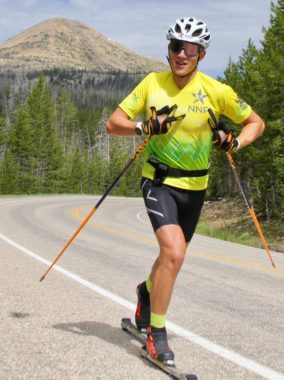
The National Elite Group is a camp project held in the fall in conjunction with the fall U.S. Ski Team (USST) and fall National Training Group (NTG) camp. Selected NEG athletes are directly embedded and immersed for one week of the two-week USST fall camp allowing them to experience firsthand how USST and NTG athletes live and train. NEG athletes follow an abbreviated training plan of the USST and a very similar training plan to the NTG athletes. NEG athletes, live, eat, train, partake in presentations and compete in time trials with USST and NTG athletes. This is a second opportunity to qualify for a National junior project that is not based solely on winter race results.
Approximately 12 athletes from the four REG camps are nominated to the National Elite group. Athletes are nominated to NEG based on their performance at their respective Regional Elite Group (REG) camp as well as their U.S. Ski & Snowboard overall National Ranking List (NRL) placement. The three-time trials plus their overall U.S. Ski and Snowboard National Ranking Lists placement are equally weighted and scored via World Cup points. Junior athletes can be nominated to both NTG and NEG. It is commonplace that an NTG athlete will also be nominated to the NEG since those athletes performing well on snow and hence meeting NTG standards often also perform well in the REG summer tests. Successful outcomes on snow are a result of adapting general skill competencies in a sport-specific manner.
(www.usskiandsnowboard.org)
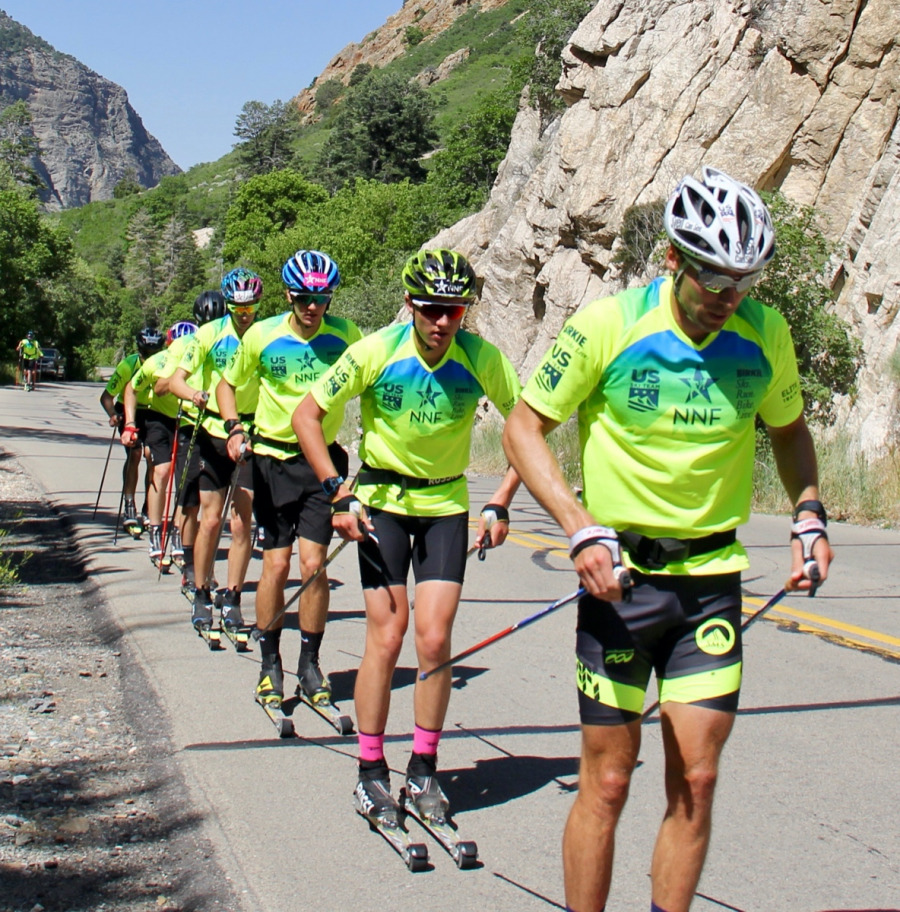
These training camps are crucial for developing skiers in the US especially since the country is so geographically large. Having the top racers come together to push one another is what helps creates a sense to team and comradery.
“It is my opinion that the single biggest impact on cross country ski development is the fact that our young athletes truly believe they can excel in cross country skiing. This belief has raised the expectations on what is possible for an American XC skier. They are setting loftier goals and backing that up with hard work.
Secondly, there has been a transformational culture shift in US cross country skiing. This is no longer a solitary and independent activity but instead a team sport that leaves no skier on the bench. Everyone can be on the ski trail training, competing, and contributing to the team’s success. The fact that we can do this sport all our lifetime is only icing on the cake.” Reports Bryan Fish from the NNF website
"Our juniors are training more than in the past. The reasons for this are multi-faceted but I believe having more opportunities at the local, regional, and national level has a great deal to do with that. It is a lot easier to train routinely in a group setting than to muster the motivation to push yourself out the door every day. We have more year-round programs and more skilled professional coaching. We have been collecting training volume data from the Regional Elite Group juniors for seven years. It was only in the last three years where we have witnessed a significant shift towards more training. Certainly, we have some juniors training more than 650 hours, but this evaluation is evaluating the mean or average hours of this group that averages approximately 100 athletes over the four Regional Elite Group camps." Bryan Fish
2013 = Average Regional Elite Group athlete annual training hours = 418 hours
2017 = Average Regional Elite Group athlete annual training hours = 470 hours
2019 = Average Regional Elite Group athlete annual training hours = 476 hours (Note 87 athletes of the total 99 athletes provided their training hours. Highest percentage recorded to-date)
2019 = Average Regional Elite Group athlete annual training hours = 476 hours (Note 87 athletes of the total 99 athletes provided their training hours. Highest percentage recorded to-date)
Our Cross Country National Development summer camp pathway is now ten years old. The last major project addition was the National Under-16 camp (formerly known as the J2 camp) which was first started in 2010 by Rick Kapala, Janice Sibilia, Ali Sehert (Deines), and Josh Smullin with the support of the U.S. Ski Team. These coaches believed that there was a need to better engage and build social team bonds at a younger age. Their inclination has proven to be accurate when evaluating the three main measures of athletic development success – growth, retention, and athletic performance. There were 19 girls and 18 boys at the first National U16 camp in Houghton, MI. In 2019, there were 28 girls and 32 boys. The selection criteria has not changed significantly over the ten years, however the number of athletes accepting their nomination to these opportunities continues to increase.
On average, athletes that later make the US Ski Team or were at some point named to a National Training Group have strength test results that are 21 points higher than all athletes in the historical data set; men on the US Ski Team or in an NTG have strength test results that are 24 points higher than all men. Both of these differences were significant at the 99% confidence level. -Data assessed by Lily Koffman – U.S. Ski & Snowboard High Performance Fellow