
Training FoR Long Distance Skiing - PART 2
By Ryan Sederquist
The Wild West of Loppet Racing
The wide variety of training styles in Visma Ski Athletes is indicative of the current status of the sport in its historic progression and development
In listening to a recent Visma Ski Classics podcast, I realized that the variety of approaches to training for long-distance skiing is startling. Part of this, I believe, has to do with the fact that right now, we are in a pioneering era of distance racing. The advent of double-poling is still relatively new, especially for citizen-level racers. Thus, strategies for maximizing the performance of a double pole-only approach over a 70km distance don’t have an ocean of information to draw upon. Running and cycling went through these phases, and we’re seeing it play out in loppet skiing now. As the Ski Classic’s brand continues to gain steam, I anticipate the advent of new techniques, trends, and training methods will only revolutionize more frequently and dramatically in the coming years.
Right now, people are trying things, seeing how they work, and making adjustments. Many athletes are coming from World Cup backgrounds and blending those traditional training methods with more sport-specific, long-distance approaches.
In listening to many hours of podcasts and reading through the Visma Ski Classics website’s content, I’ve attempted to identify some trends and anomalies across the skinny ski spectrum. Quotes/information are either recovered from VSC podcasts or the articles linked at the bottom of the page.
Tord Asle Gjerdalen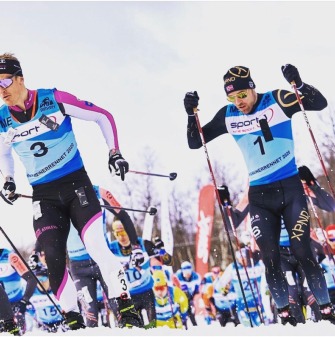
Team: Pro Team Athlete
Resume
2x Overall Champion
3x Marcialonga winner
Vasaloppet winner
Gjerdalen uses mostly double poling and running. On a recent podcast, he said he runs two out of every three days and he double poles two out of every three days as well. Even though he used to be a good skate skier, he rarely does it now. He diagonal strides even less - 2-3 times per year.
A veteran, he as altered his training approach as he has aged.
“It has changed over the years. You have to change where you are, not where you wish to be,” he said on a podcast this November. He believes you need to find out your abilities and qualities and then figure out how to improve them. “Then you have to make your own philosophy and stick to your plan,” he said.
Gjerdalen also understands that even introspective analysis is a futile activity. “It’s not easy to find what’s actually did work and why did it work that year and not this year? Why does it work for me and not my teammate,” he said, identifying a very important principle of the stress-recovery balance - stress is multifaceted and affects individuals uniquely.
While many athletes mix in sprints or intervals in their long sessions, Gjerdalen keeps easy training easy and hard training hard. A threshold session is usually 8x8 min with 1 min rests. “I’m really fond of those types of intervals where you have to work the pace and keep it there for a lot of time,” he told Virtanen. He also has shorter intervals with even higher speeds, which becomes more of the focus In the winter.
As far as strength training is concerned, Gjerdalen uses it, but recognizes it isn’t always about simply building power, but can be designed to strengthen muscles critical for improving and preserving good technique.
In the autumn, Gjerdalen will sometimes include five intensity sessions per week.
Morten Eide Pedersen
Team: Eksjohus
Resume
Hill Climb VSC bib winner
3x Jizerska Champion
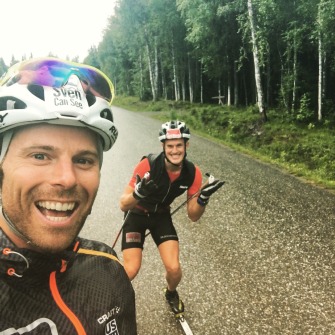
“The biggest part of my training is endurance but using different methods. My thought is that you can train more if you exercise in various ways. Intervals, I train either in blocks or for maintenance with 2-3 sessions in a normal training week. They can vary between high intensity and controlled (threshold) intervals depending on the training period. Strength training is always a part of my weekly program, either maximum and core training”
Pedersen’s notable workouts include double-poling intervals at threshold - 6x10 min with a 1 minute break. “This exercise aims to give you a high speed that you can keep for a long time,” he tells Virtanen on the VSC website. When he is trying to build his overall capacity, he utilizes running. 6x5 min with a 2 min break.
Pedersen’s training is calculated, varied, filled with intervals (2-3 per week) at different speeds, and organized into blocks.
He uses strength training, but says his focus on maximum strength training has changed from season to season. “Strength training is always part of my weekly program, either maximum or core training,” he said.
Stian Hoelgaard
Team: Curira
Resume
*Vasaloppet podium placer five straight years
*11 VSC podiums
Hoelgaard told Virtanen that while strength training had been a huge part of his regimen, he ditched it in 2020. “I was not sure that it was going to work out well, but I needed to make some changes, and then I could take time and energy for other things in my training, which I think worked out pretty well,” he said. Still, he thinks weight lifting is important, especially for certain athletes. “Strength training has always been an important part of my training. I think it is important especially for younger athletes. When you reach a certain age and level, I think you have to prioritize and look at your strengths and weaknesses.”
Astrid Oyre Slind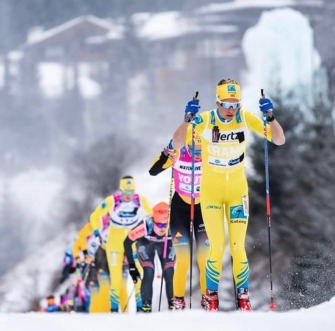
Team: Koten Eidissen
Resume
5x VSC stage/race winner
21 podiums
“My favorite summer session is running ridges,” Astrid told VSC. “Awesome views, easy running with good friends, and a little twist of adrenaline is the perfect combo! I like to find new places to run, but some of my so-far favorite ridges are in Switzerland, where my best friend has a cabin. The mountains around there are beautiful, wild, and runnable at the same time.”
Petter Eliassen
Team: Ragde Eiendom
Resume
2x Vasaloppet champion
1x Birkebeinerrennet champion
His favorite workout is his weekly 3-4 run in the mountains. His key hard workouts vary between 4x15 minutes of double-poling or 6x6 minutes of uphill running with poles.
Eliassen’s Ragde Eiendom coach, Jorgen Aukland, a former athlete and the brother of the famous Anders Aukland, said in regards to a reasonably basic, effective training modus operandi, “To build a solid base with lots of hours, strength training and also two medium hard sessions a week – that’s a good formula,” he told Teemu Virtanen. “And of course you should compete in both roller-ski and running races. Or find yourself another fun activity such as biking or triathlon.” He suggests balancing things this way: 70% easy training (completed mostly via roller-skiing but with some running), 20% interval sessions, medium to hard, and 10% strength.
Petter focuses more on easy, saying his concoction is roughly 85-90% low intensity, 5-10% high intensity/competition, and approximately 5% strength. A typical low intensity workout is 60-80km on rollerskis with possible sprints thrown in.
Team Ramudden’s director Gustaf Korsgren has a similar mixture: 80% low speed training, 5% strength training, 7% hard intervals, and 7% somewhere in between. “But what happens within those areas vary a lot from year to year, from athlete to athlete,” Korsgren said
Some similarities:
*A lot of double poling
One thing all of these guys do, not surprisingly, is double pole. In general, it is prioritized for the entire year. Guys like Max Novak do it seven days a week on snow and seven days a week during the rollerski season, too. Even for those who head out for the occasional skate ski, there is seemingly no replacement for a consistent diet of double poling for the serious classic ski loppet racer.
Of course, World Cup racer’s double pole a lot, too. But, not in the same way and not to the same extent, and research says it shows in certain field and lab tests.
*Stuff that is really long
As much as my elbows hurt to type this, in researching for this piece, the decision to conduct 4-6 hour double pole sessions on a regular basis was unanimous for Ski Classics racers. Lager 157’s trendy “Vasalopp-pass workout,” wherein skiers essentially circumnavigate the globe and then conduct a few 30-60 minute threshold repeats (actually, it is a 4-5 hour ski with intermittent intervals and bursts of varying speeds, mimicking the race itself) is becoming increasingly popular.
For us mere mortals, I personally would shy away from this type of a workout on pavement. Instead, follow Teemu Virtanen’s suggestion of combining a long bike with a roll, spicing it up with randomly placed speeds along the way. In the winter, I say go for the actual ski-only experience, but pack a power bar or two and maybe download something interesting, like the latest episode of the Seder-Skier Podcast.
*Not afraid of long intervals, but cognizant of the sprint stuff, too.
The classic 6x8’s, 5x5’s, and 6x10’s are inserted into most of these training plans, but so are things like 4x15-20 minute intervals. Reigning yellow bib champion Emil Persson detailed a 4x10km double pole workout on a hilly rollerski track on his visit to the VSC podcast. The 40k’s of work was separated by a 1-2 minute recovery roll back to the starting line. The takeaway: some intervals are long. However, that isn’t the whole story. They also include very short speeds, which makes sense in the mass start format, where both the start and finish could require a sprint.
One interesting workout that seems to be filtering its way through various programs is the 40-20 workout, which is 40 seconds on with 20 seconds of recovery. I don’t know a lot about the fartlek-like session, but it reminds me of the infamous 30/40 Steve Prefontaine session, which alternated 30 second 200s with 40 second 200s (4:40 mile pace for those keeping track) for 5000 meters, without stopping. Keep the trash can close to the track, people
Some differences:
*Once is nice, but so is twice?
A lot of athletes train only once per day, logging a 3-5 hour session. Most World Cup skiers are used to the twice-a-day ritual, and some who transition to the long-distance scene maintain that, logging a 2-3 hour double pole/primary workout in the morning and coming back with an easy bike ride to get the recovery started in the afternoon. While this is more rare, I will say it is also in many ways actually more feasible for the average person working a 9-5 job! I personally approach training this way and am able to squeeze in a high volume of training without really feeling like I’m blocking off massive parts of my day to slam poles into the pavement.
*Weight training - is it really necessary
Even within teams, the use of weights isn’t standard. Eliassen includes strength training, but teammate Oskar Kardin does not. Persson, the overall bib winner, and Novak, the rising star and winner of numerous roller-ski races this summer, are not keen on strength training. Novak believes technique is much more important, and that he gains too much weight if he lifts a lot. One theory I have on this is that the new wave of Visma Ski Classics racers has come to the marathon circuit without prior World Cup careers. Not having been inundated with weight training throughout a World Cup career, they decide to not include it in their program. Athletes like Tord Asle Gjerdalen, who raced in the Olympics and for Norway in races of all distances, still have a firm belief in its benefits, so they do use it and believe strongly in it.
My belief: for most of us, weight training is hugely beneficial for injury prevention and power development, which in turn can help us with posture and technique. Also, if nothing else, it mixes up the training while keeping things relatively sport-specific, which I am always a big fan of.
*Focus on hours or focus on structure and quality
Long and easy means something different, even for high-level athletes with similar resumes. Take Tord Asle Gjerdalen (Vasaloppet champion and course record holder) and Anders Aukland. “One good example of a typical summer training session is three hours of easy roller-skiing. However, if you ask other people about (the Aukland speed), they say it is harder/faster pace than many other athletes tend to have,” Jorgen Aukland, brother and coach for Anders says. “So, if Tord Asle Gjerdalen goes for four hours, Anders covers the same distance in three hours. Our purpose is to get in some hours, keep the volume up and work on the stamina.”
In listening to Novak, who casually said he rollerskis about five hours per day in the same way you and I guiltily admit we have maybe 1-2 cups of coffee per day, the emphasis seems to be on simply accruing hours. This is the same for teammate Johannes Eklof. The two Pro Team athletes’ love of training has led to a gradual increase of annual hours, which, in and of itself, has appeared to lend to some improvement. The application to citizen-level racers here is that for those of us who are newer to the sport, increasing our hours, as long as there is an intentional focus on improving ski technique while doing so, might in and of itself, help your skiing economy and consequently, your performance. In other words, most of us haven’t exhausted the gains we can make from improved technique, so simply getting on snow IS helpful. At a higher level, of course, specific workouts designed to target certain energy systems, is necessary for further improvement.
For athletes coming off of a grueling World Cup career or ones who have exhausted their annual hour limit (and seen what happens as a result), such as Tord Asle Gjerdalen (who doesn’t even fully reveal the exact number that was), the total annual hour is not the be all end all. They understand what components need to be in place for success, and target specific blocks, sessions, and zones. Whereas they may have trained 1100-1400 hours before, they know it is more important to keep speed and power up, and, at their age, that can be accomplished in 800-950 hours.
*Rollerski like a crazed lunatic or mix up the modalities?
Coach Jorgen Aukland believes that during the summer, effective training can occur via multiple modalities. “It is important to do many types of training, not only double-poling from May to December,” he told VSC.
“Have fun, go biking, surf skiing, track running or find other training methods to keep your motivation up and to avoid any injuries. Have fun in the summer!” Still, it isn’t as have you can replace the effort necessary, he says.
“But there are NO SHORTCUTS, you need to do the job!”
Pedersen, who emphasizes building capacity and endurance through multiple means, believes that variety helps to avoid monotony, especially in the summer and fall, when athletes who focus too much on specific fitness and roller-skiing races might peak too early.
“The traps you should try to avoid are to exercise too monotonously and a little bit too much in the early summer,” he said.
“It’s smart to have a progression in your training volume from summer to fall, both for the motivation and the variation of your training.”
What do you need to be good?
One reason Nordic skiers love talking about training and have such a wide variety of opinions and styles is because the current physiological demands for excellence in the sport are so widespread. Along the aerobic and anaerobic continuum, skiers are required to check every box. Skiers produce peak double-poling forces as high as 430 N within 0.05 seconds, as well as forces greater than 1600 N during leg push-off when skating.
They need power, endurance, technique, balance, and flexibility. They need to address VO2 max and lactate threshold without compromising overall peak power. In uphill sections of races, supramaximal efforts with an oxygen demand which is 120-160% of VO2peak have been recorded. Throwing down these surges requires the muscular explosion of a boxer. Having the aerobic capacity to recover from them requires the endurance of Eliud Kipchoge.
That being said, training programs should theoretically aim to address these physiological needs. For collegiate and post-collegiate athletes able to dedicate the necessary time and resources to this singular focus, detailed programs with strict guidance from expert coaches make sense. For recreational athletes or high-level citizen racers, though, I believe llofty goals are still attainable while balancing a regular job, family, etc.
Here are my nuts and bolts advice for those people interested in becoming the Visma Ski Classics version of your very best self:
Integrate a lot of double poling. I haven’t tested this theory, but I believe that if you can do 60-minutes on a ski-erg at an L2-L3 effort without stopping, your body, and maybe more importantly, your mind, is rugged enough to double pole 88-92% of all terrain found on most North American loppet courses. My theory is based on the idea that there isn’t a huge difference between double poling for 45-60 minutes and continuing on for 2 or 3 hours, as long as hydration and nutrition needs are met, and as long as your mind is fit for the task. The endurance potential of the upper body based motion of the double pole is much more sustainable than running or skate skiing. You just need to get over the decades-ingrained habit of striding everything with even a remote incline. In order to do that, set aside days for double poling. Those “skate” days where the grip wax requirement requires a PhD …. Make it a double pole day.
Then, double pole everything, even the really steep stuff. You might eventually find yourself addicted to the fact that double pole workouts can be conducted in more places and in more times throughout the year than the other techniques. I’ve double poled in late May on a wonderful two-mile stretch of a shaded railroad bed numerous times, usually well past the dates when my friends assumed skiing was done for the year. The same is true in the fall - all you need is a little snow and a few cars to pack down a gravel road and voila!
Variety is the spice of skiing
In spite of the principle of sport specificity, I suggest mixing up your training and attaching some of those physiological demands to certain modalities. For example, when I’m in Leadville, I try to grow my aerobic base and get “uncomfortable” in the lungs through a lot of uphill cycling. I also try to train the mental side and L1/aerobic side on the bike. This is because I don’t know how many 4-5 hour rollerski sessions I have in my life! I’d rather build that part of my fitness doing something more sustainable while simultaneously and intentionally getting away from skiing. This has the effect of recharging my mental batteries, too. Use the weight room to build power, running, if you can, to build VO2 max, and skate rollerskiing to build balance. This is one approach - find one that you can incorporate consistently.
Set some different goals
One challenge, especially as you age, but also as seasons/weather changes, is being able to conduct the workouts you feel are necessary for success, at any given time and on any given day. What if you get hurt? What if the roads don’t allow you to bike? In the off-season, I recommend taking advantage of this opportunity to pivot your mind away from the standard fitness markers like VO2 max, heart rate, time trial performance, and strive for some other carrot. One of my favorites is tracking altitude climbed in a week, month, or training block. Always have a target and something to measure your progress (or lack thereof), but be willing to be flexible.
Give thanks and find the joy
It might seem silly to include this, but knowing what your “why” is might be the most important step to sporting success. It will be the thing that gets you out the door when you really can’t imagine doing it. Plant your purpose in something foundational, and you will surprise yourself with your discipline.
No matter what stage or ability you’re in, give thanks, too. Fostering thankfulness, every day, will energize you more than a superficial surge of caffeine….though...that is important, too!
Keep on striding …. And keep on striving.
Articles from vismaskiclassics.com