
Food as fuel - What to use and what to avoid
By Andrea Henkel Burke 
 We all know we want to fill up our energy storage after training, and often we only think about carbohydrates. When sweating on sweltering days in Summer, we are also aware of our mineral intake. We should make the same connection in winter. When I came in from a training session during the winter, I had to change because I was sweating. Maybe not as much as in 90 degrees, but I still lost minerals through sweat. But we need minerals and vitamins, essential fatty acids, and amino acids for cell structures and cell function. As an example, let’s look at magnesium. It is a pretty common mineral in the athlete’s world, often related to cramps. Magnesium controls calcium in our muscle cells. If magnesium is missing, calcium can lead to ongoing muscle contractions, which is a cramp. Magnesium also is influencing the balance of electrolytes in our cells. And to name a third, out of 200 functions magnesium is responsible for, I am choosing a very obvious connection between magnesium and performance. To produce ATP in our mitochondria, we need magnesium - no magnesium equals no energy. Now you probably want to know which foods contain magnesium? Pumpkin seeds, green vegetables like spinach, nuts (note: peanut is not a nut), or cacao in dark chocolate are good sources of magnesium.
When I get a recommendation about what to eat or what not to eat, I like to know the reason behind this recommendation. I think a plan is sometimes more challenging to follow than using knowledge for making smarter meal decisions. But a goal is easier to follow when you know some food facts. Today I am not coming up with a big list of foods to eat and ones to avoid, but points to make healthy and performance supportive meal decisions on your own.
My first tip will be very general but important. Then I dive into two topics, which are going to help you better understand individual food choices.
I encourage everyone to try this first point. I know it sounds simple, but I’m sure it will make a difference!
So, here we go:
Whatever you eat or drink, ask yourself if you genuinely think this will support your body to perform your best. Just doing this seemingly simple step might already stop you from some eating mistakes. I believe that we have at least some idea what might be healthy choices and what not!
Through further education and ongoing published studies, I now have more knowledge about food and essential nutrients than seven years ago when entering my last racing season. Maybe I would not have been sick at my last big event, the Olympics in Sochi, knowing what I know now. Of course, I wish I would have known more back then, but I still don´t want to beat myself up too much. I still was very aware of what I was putting into my body–and that's what I want for you. Use the knowledge you have and the information you will get from trying to learn more. Be aware of the things you are providing your cells to function for you and your performance.
Here is a quick example. You probably know that Coke is not a fuel for high performance (If you don´t know, Coke is not a high-performance food or drink!). It’s easy to use this knowledge for some of you and not consume it at all; for others, it might be harder to follow through. But just remember, you don't want to blame yourself when not feeling good or getting sick. Maybe now it gets easier for a few more of you to split up with Coke. You might wonder why Coke is not good. To keep it short and straightforward, it doesn´t support your cell health.
With my second topic, I´m diving a little deeper into the why and why not to help you make some more decisions, like the one you just made with Coke ;). When we train and exercise, we burn energy, we sweat, and we stress our system. The last point sounds bad, but this is what we need to do to get better. Our body needs to adapt to a training stimulus (stress) to be less “stressed” when we do the same session at the same speed at another time. What we ultimately want is to be the same “stressed” while being faster.
So, what happens when we train? We burn carbohydrates and fat, produce lactate, the sympathetic nervous system is activated, our cells need to make more energy (ATP), sweat out different minerals, and our body is using up and activating various sources to keep us going.
This is just one little detail of why we want to look at food not only as our source to fill up used carbohydrates but also as our nutrient provider for high-performance body function.
Pasta is or was a typical #1 athlete meal before race day. You do get carbohydrates, but keep in mind, those are processed carbohydrates; Spaghetti does not grow on a tree! The more our food is processed, the fewer minerals and vitamins it will contain. In an earlier article, I also explain that we have limited carbohydrate storage (See the entry: Carbohydrate Awareness During the Racing Season ). When this storage in our muscles and liver is full, there is no need to eat more pasta, at least not to load our carbohydrate storage.
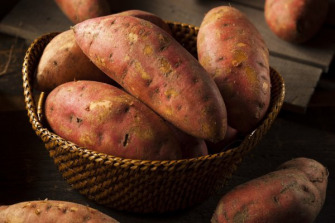
We know what we find in Pasta, and I think we also know what we don't find in pasta; Pasta is missing essential vitamins and minerals. So please don´t forget to eat some vegetables when having pasta. Vegetables, by the way, also have carbohydrates. A medium Sweet Potato has 24g carbohydrates, which is 98 calories - and it has other nutrients as well ;)
And now I want to talk a little about protein, which we all know is important for performance. We need our proteins to get broken down into peptides, and from there, eventually into single building blocks, which are the amino-acids. Those amino acids get built back together in a specific order to become our own body protein. If we get all the amino acids we need through the protein we eat, we have 100% bioavailability.
With protein, we often think of meat. But today, I want to talk about another very famous protein - gluten.
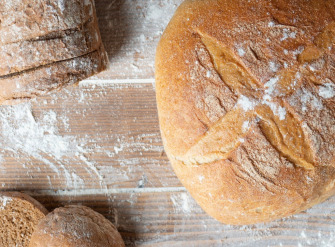
As a quick reminder, gluten is in most of our flour, bread, pasta, cakes, and baked goods. Around 60% of the protein in those foods is gluten protein. Some of the gluten protein, unlike other proteins, can’t be fully broken down.
We do have one enzyme, which is kind of taking care of a very last part. It's called DPP IV and cuts a seven amino-acid peptide, which is part of the gluten protein, in two dipeptides (two amino-acids) as well as one tripeptide. This tri-peptide can not be broken down anymore, and this creates a problem after just 4.5 grams of gluten a day. The tri-peptide starts blocking the DPP IV enzyme, which causes other issues.
First, the seven-amino-acids peptide accumulates. This specific peptide is an exorphin. There are different exorphins, and not all of them are necessarily bad. The exorphin in gluten is called Gliadorphin, which is not very beneficial. It might make us feel relaxed and satisfied for a short amount of time. That's why pasta could make you feel good and seems to be a good thing, but it might also be the reason why bread or pasta are addicting. Gliadorphin can also cause “silent” constipation, which means that we don't feel it, but we also don't have regular bowel movements–you certainly don’t want this before a race!
Gliadorphin is also associated with mental illness. When entering the bloodstream, it can make it into our Prefrontal Cortex, where it can contribute to diseases like Alzheimer’s or Dementia.
When the DPP IV enzyme is blocked, it can’t break down Gliadorphin anymore, or its other tasks. Those tasks include controlling a substance, which can now accumulate as well. This substance can cause constipation with cramps or even diarrhea. The substance can also enter the bloodstream and from there go everywhere. Now we experience seemingly totally unrelated symptoms like migraine, pain, depression, or fatigue.
So now, you are probably wondering how much is 4.5g of gluten. Here is one example: 100g whole grain bread has 8.4g gluten.
I want to end this article by going back to my first point. With your knowledge about limited carbohydrate storages, magnesium as an example of the importance of minerals, and gluten as a protein that can’t be totally broken down; you can now decide what to eat next.
What do we find in Pizza? What not? What do we find in Salad? What not? what do we find in Coke and what not…?
This was probably not the article you expected when reading the headline. I hope you learned something and found a different way to think about food instead of following a simple list of do’s and don'ts.
Bon Appetit :)
In case you wonder what I would have done differently on my way to Sochi. I would have made sure to have more immune supporters with me, like vitamins and minerals.
If you don´t mind, please let me know if this article was helpful or not.
Thank you very much!
trainer@andrea-burke.com